I still remember the first time I stumbled upon Volothamp Geddarm in Baldur's Gate 3. There he was, a pompous, flamboyant bard, tied up in a goblin camp after failing spectacularly to infiltrate the cult of the Absolute. I couldn't help but laugh—here's this world-renowned sage who gets himself into the most ridiculous predicaments. But after 200 hours of gameplay and countless interactions with this strange man, I started asking some deeper questions. How is a human character from the old Baldur's Gate era still kicking about in a game set over a century later? The answer, as I’ve come to learn, is far more epic than anything Volo himself could ever write.
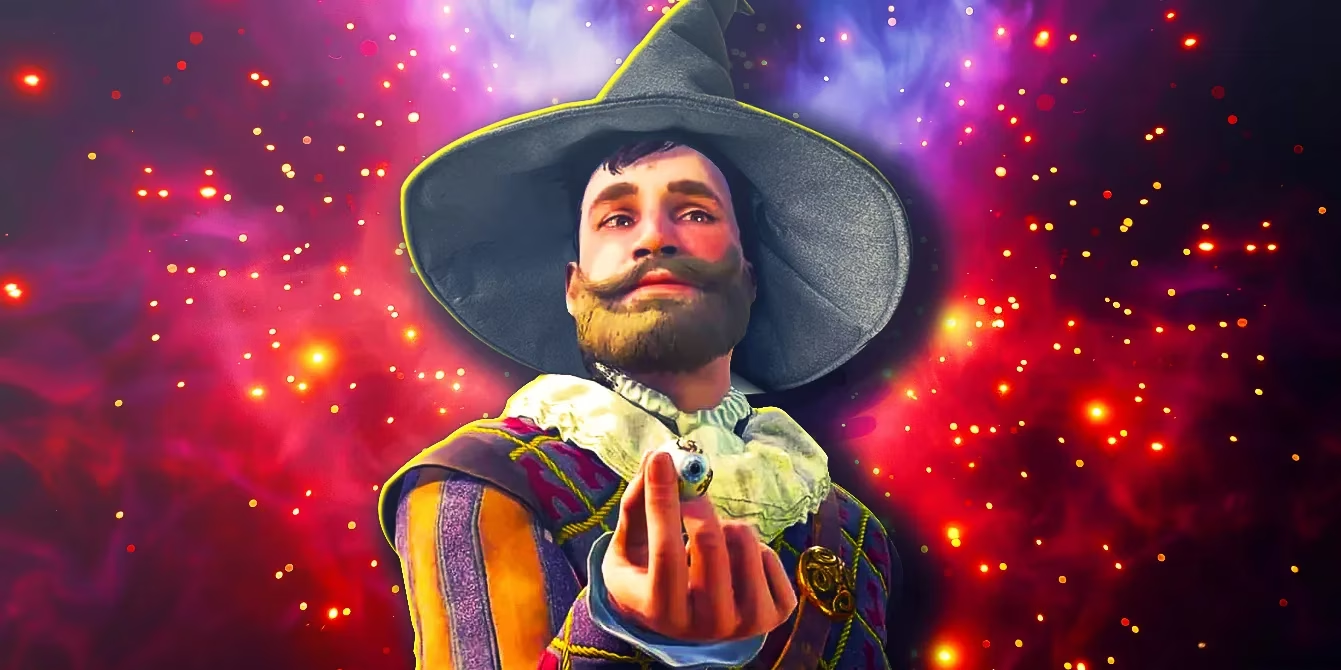
If you’ve ever played the original Baldur's Gate or its sequel Throne of Bhaal, you might remember Volo as that chatty tavern patron who would spill rumors about quests, often to the point of annoyance. The game manuals were even penned from his perspective, injecting his trademark flair into every line. In Baldur's Gate 3, Larian Studios brought him back as a temporary camp follower with a truly questionable side quest—performing amateur eye surgery on your character. Naturally, most players let him try, with... mixed results. It’s a hilarious moment, but beneath the humor lies a D&D lore bombshell that changes everything we thought about this seemingly trivial character. Why is a mundane human, who is neither a powerful wizard nor a chosen hero, still alive after 100-plus years?
To unravel this, you need to understand the Weave—the raw magical fabric of reality in the Forgotten Realms. Mystra, the goddess of magic, maintains this Weave. Throughout history, her death has caused catastrophic magical collapses. The first was Karsus's Folly, when the mortal mage Karsus attempted to steal Mystryl’s power and accidentally destroyed the Weave. The second was the Spellplague a few centuries later, triggered by the murder of Mystra. In both instances, reality itself buckled, magic went haywire, and countless lives were lost. After the Spellplague, the overgod Ao appointed a new Mystra from mortal ranks, with a crucial directive: to prevent another total collapse, she must distribute her essence into multiple Weave anchors—hidden vessels and locations that would stabilize magic even if she were killed again.
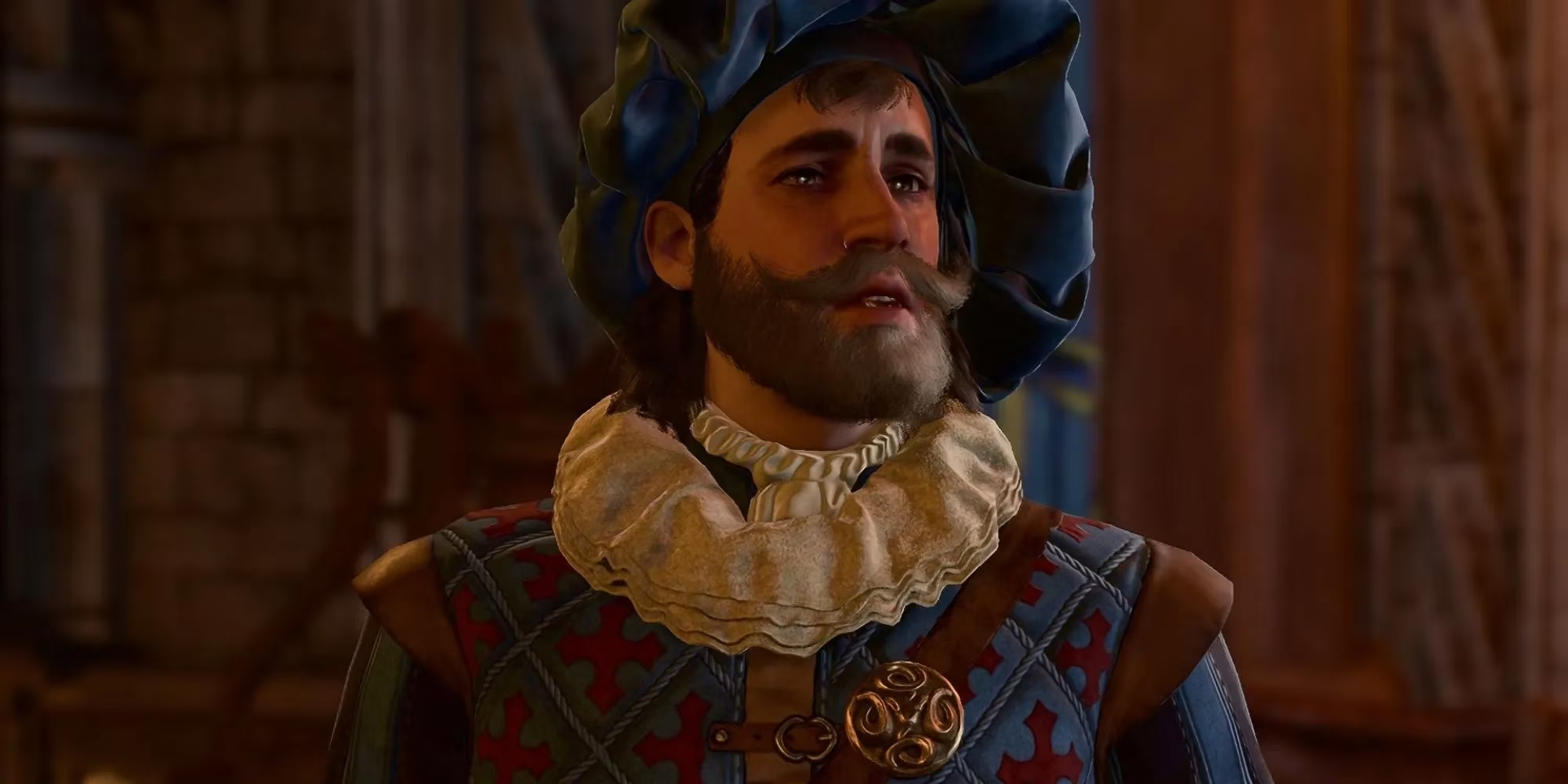
Mystra chose obvious anchors like Elminster, the legendary archmage, to carry her power openly. If you wanted to bring down the Weave for a third time, Elminster would be one of your first targets. But Mystra is wiser than that. She also selected utterly inconsequential individuals as anchors—fail-safes that no one would ever suspect. And guess who one of those is? Yes, Volothamp Geddarm. The grandiloquent, slightly incompetent writer you’ve been snickering at is actually a walking magical keystone. He doesn’t know it, and his power hasn’t made him a better spellcaster. But that divine fragment within him has extended his lifespan and, in moments of true peril, has even saved his life. Ed Greenwood, the creator of the Forgotten Realms, devised the Weave anchor concept precisely to explain how certain short-lived species miraculously survived from earlier eras.
So the next time you rescue this bumbling sage from goblins or listen to his self-aggrandizing tales, ask yourself: is he really just a comic relief character, or is he the secret thread holding the Weave together? The game never explicitly tells you this, but every encounter with Volo feels different once you know the truth. His absurd luck, his inexplicable survival through cataclysms—it all makes sense. Even Elminster has quietly stepped in to rescue Volo on multiple occasions, not out of friendship, but because his continued existence is vital to cosmic stability.
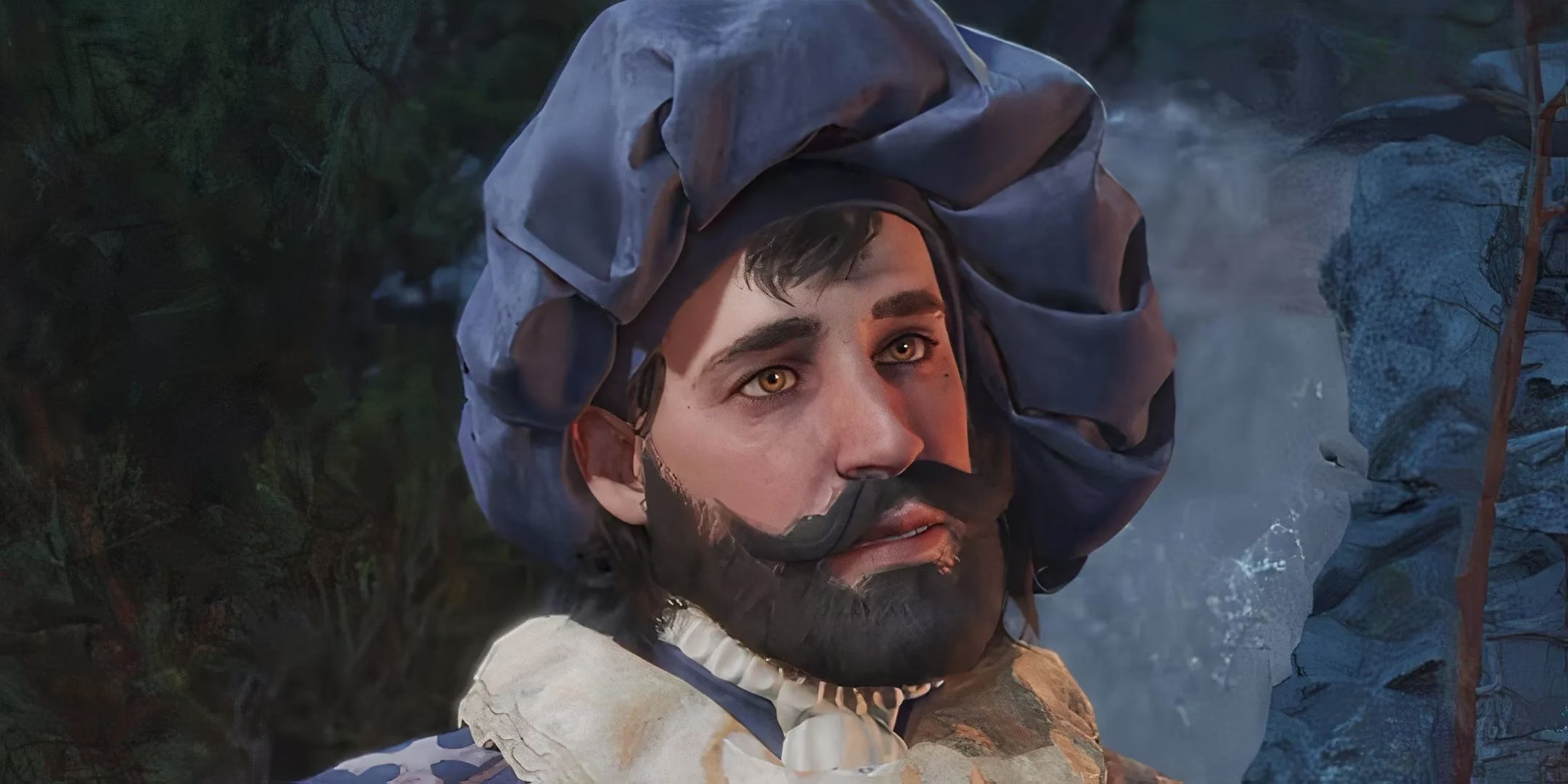
From a gameplay perspective in 2026, Baldur's Gate 3 still rewards players who dig into the lore. Larian packed the world with details that connect decades of D&D history, and Volo is just one shining example. The more you examine him, the more you realize his design is masterful: a character who is genuinely funny but also deeply embedded in the metaphysical structure of the setting. It’s a perfect blend of lighthearted storytelling and epic high fantasy.
Remember this the next time you see those goblins mocking poor Volo. Treat him with respect—he might just be the reason magic hasn’t collapsed yet. And please, whatever you do, don’t let him touch your eyes. Some things even a Weave anchor cannot fix.