Let me tell you, as a player who's spent hundreds of hours in Faerûn, there's something truly special about Shadowheart that sticks with you long after you've put down the controller. It's not just her striking silver hair or that mysterious artifact she guards with her life—it's the journey she takes you on, one filled with doubt, faith, pain, and ultimately, self-discovery. When I first met her on that ill-fated nautiloid, I had no idea how deeply her story would intertwine with my own choices or how much her personal struggle would come to mirror the game's central themes of memory, identity, and free will.
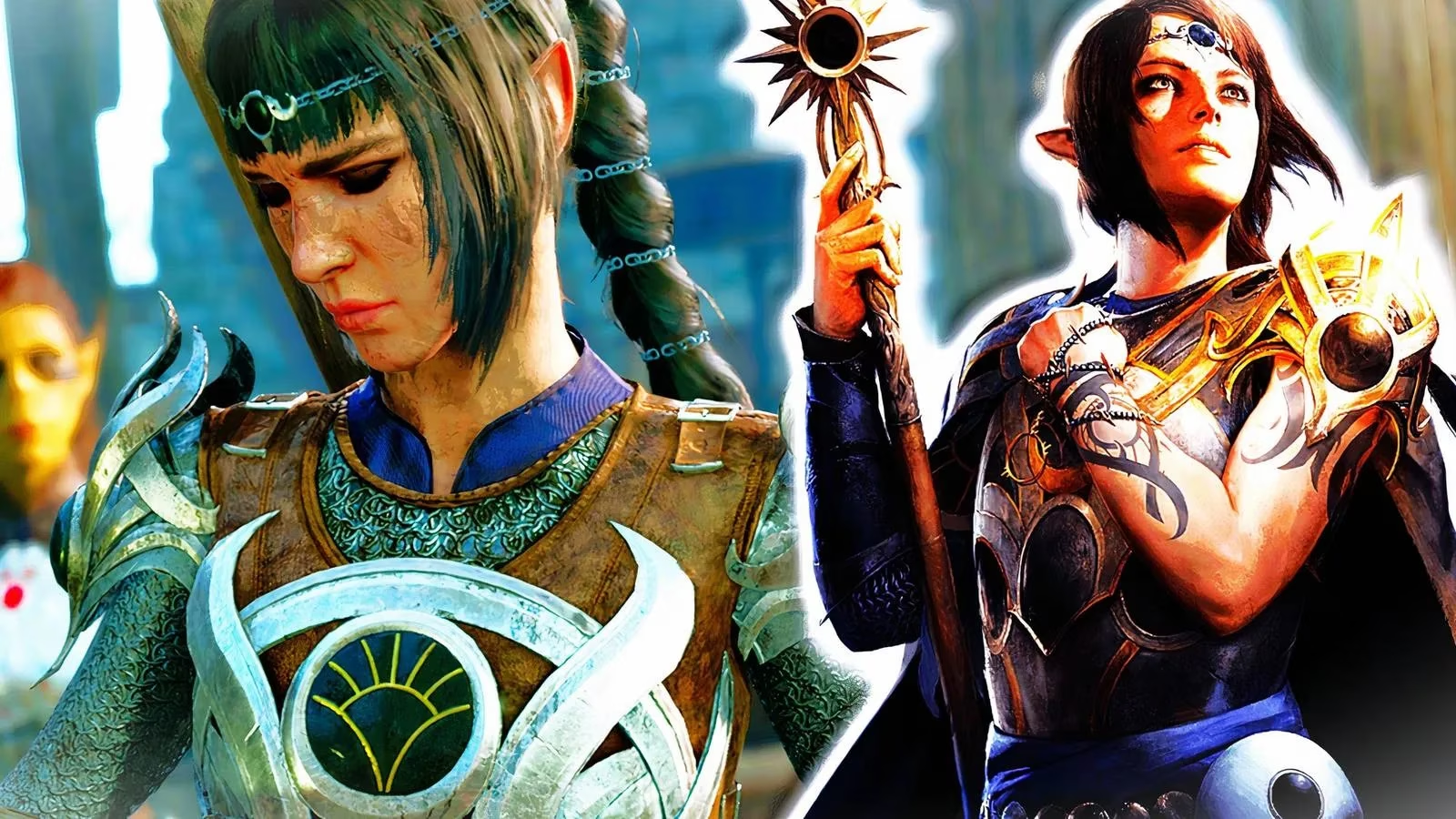
What makes Shadowheart stand out in a cast of already exceptional characters? For me, it starts with that beautiful tension between her vulnerability and her strength. Here's someone carrying immense trauma—memory loss, religious indoctrination, a past she can't fully grasp—yet she faces every battle with unwavering determination. She's not a damsel in distress; she's a warrior priestess struggling to reconcile what she's been taught with what she feels in her heart. That internal conflict makes every interaction with her meaningful, whether you're sharing a quiet moment at camp or debating the nature of Shar's teachings.
Her story unfolds like a carefully crafted mystery novel where you're both reader and participant. Remember those early conversations where she'd deflect your questions with practiced ease? "Some things are better left buried," she'd say, her voice carrying that perfect blend of caution and curiosity. Earning her trust wasn't just about selecting the right dialogue options; it felt like genuinely building a relationship. Those skill checks to learn more about her weren't mere gameplay mechanics—they were milestones. Each successful persuasion or insight check revealed another layer, another piece of the puzzle that is Shadowheart.
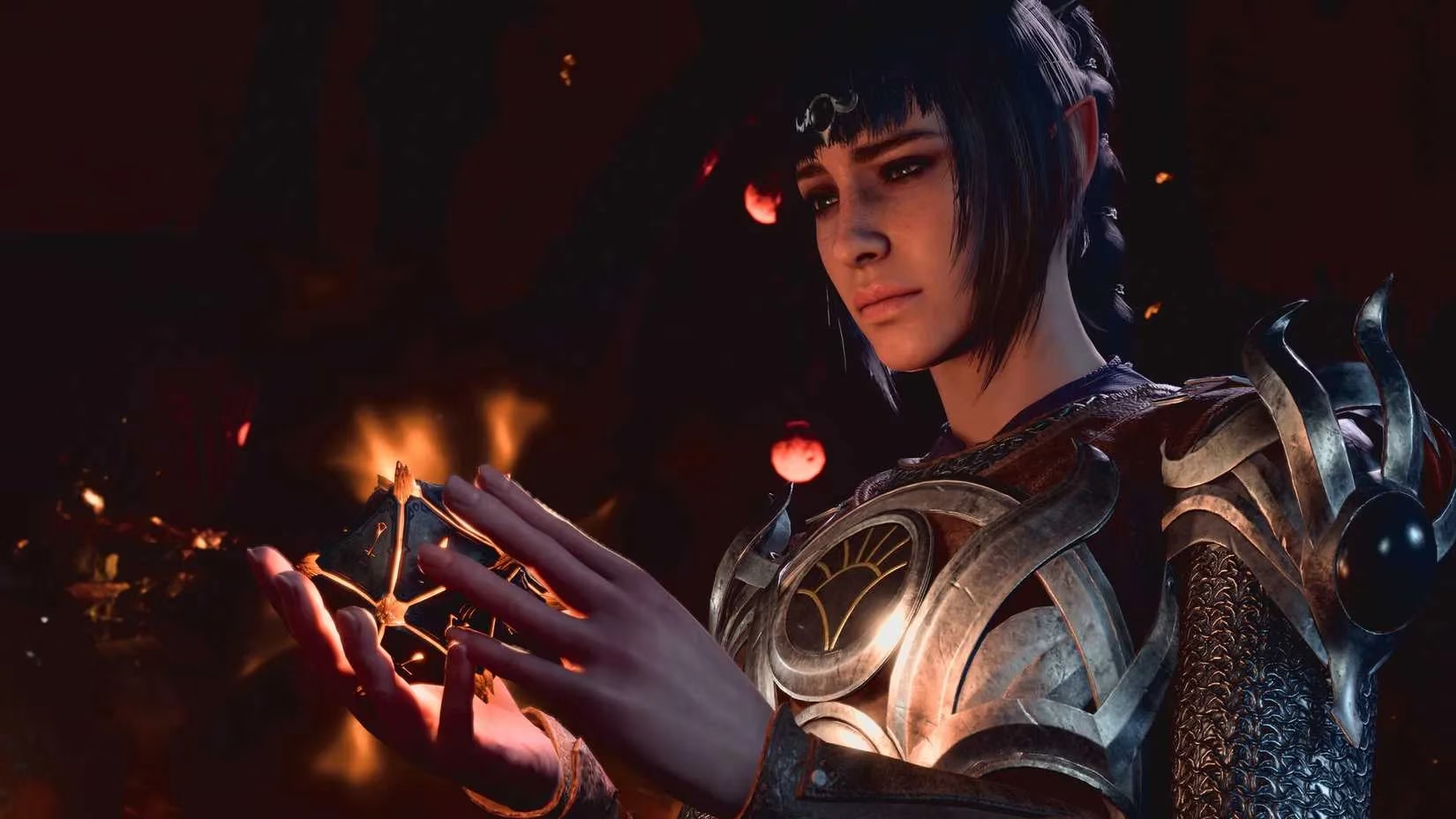
The brilliance of her character arc lies in how it mirrors player agency. Your choices don't just affect the world; they fundamentally shape who Shadowheart becomes. Will she embrace the darkness of Shar completely, becoming a ruthless Dark Justiciar clad in shadow? Or will she find the courage to question everything she's ever known, stepping into the light as someone entirely new? I've played through both paths, and each feels authentic to different aspects of her character. The Sharran path reveals the depth of her conditioning and capacity for devotion, while the Selûnite transformation showcases her resilience and capacity for change.
Some of my most memorable moments in gaming come from Shadowheart's story:
-
The Nightsong Decision 😮 – That pivotal choice in the Shadow-Cursed Lands where everything hangs in the balance
-
Parental Revelations 💔 – Learning the tragic truth about her family and seeing how she processes that trauma
-
Camp Conversations 🌙 – Those late-night talks where her guard slowly comes down, revealing the person beneath the Sharran armor
-
Romance Scenes ❤️ – Whether you pursue it or not, her romantic arc is beautifully written with genuine emotional weight
What's fascinating is how her religious struggle becomes a metaphor for larger philosophical questions. Shar represents order through pain, loss as enlightenment, and secrets as strength. As Shadowheart grapples with these teachings, players grapple with them too. Is there wisdom in embracing suffering? Can forgetting truly be a blessing? These aren't just background lore—they're questions that Shadowheart lives every day, and through her, we get to explore them in a deeply personal way.
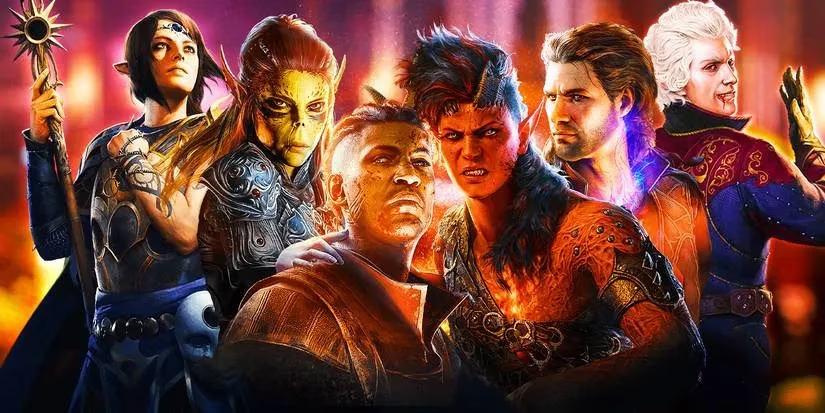
Of course, Shadowheart doesn't exist in a vacuum. The entire Baldur's Gate 3 companion roster is exceptional, each with their own compelling arcs that players have fallen in love with. Astarion's journey from abused spawn to finding genuine freedom (or terrifying power) resonates with anyone who's struggled with trauma and agency. Karlach's infectious joy despite her literally burning heart reminds us to find happiness where we can. Lae'Zel's crisis of faith in her people's ideology mirrors Shadowheart's in some ways, creating interesting parallels between the two seemingly opposite characters.
But there's a reason why Shadowheart remains one of the most beloved figures in modern RPGs. Her story combines:
| Element | Why It Works |
|---|---|
| Mystery | The gradual memory recovery creates natural narrative tension |
| Agency | Her fate feels genuinely in the player's hands |
| Complexity | She's neither purely good nor evil, but believably conflicted |
| Growth | Whether she embraces or rejects Shar, she undergoes profound change |
| Relatability | Her struggles with identity and belief speak to universal experiences |
The fan art that continues to pour in—like that stunning 3D render that recently took Reddit by storm—isn't just appreciation for a cool character design. It's a testament to how deeply players have connected with her story. We see ourselves in her doubts, cheer for her victories, and mourn her losses alongside her. In a game filled with world-ending stakes, Shadowheart's personal journey often feels just as consequential as saving Baldur's Gate itself.
As we look at the legacy of Baldur's Gate 3 in 2025, Shadowheart stands as a benchmark for companion character writing. She demonstrates that the most compelling RPG characters aren't just quest-givers or combat partners—they're mirrors reflecting our own choices, philosophies, and emotional investments back at us. Whether you guided her toward the darkness or the light, helped her remember or encouraged her to forget, your Shadowheart became uniquely yours, and that personal connection is what keeps players coming back to Faerûn again and again. Her story reminds us that in games—as in life—the most meaningful journeys are often the ones we take together, one conversation, one choice, one shared moment at a time.