In the vast, narrative-rich tapestry of Baldur's Gate 3, a dissonant note sometimes echoes from the battlefield. For all its global acclaim, a shared experience persists among a portion of its adventurers—a stumble not before grand story beats or moral quandaries, but in the rhythm of turn-based combat. The overwhelming freedom, the sprawling scope, the intricate mechanics can be daunting. Yet, for many, the initial barrier is simpler, more visceral: the frustration of a missed attack, a spell fizzling into the air, particularly when cast by a certain silver-haired cleric. This early-game combat challenge, often personified by Shadowheart's errant cantrips, has become a rite of passage, a puzzle to solve on the path to mastering Larian's masterpiece.
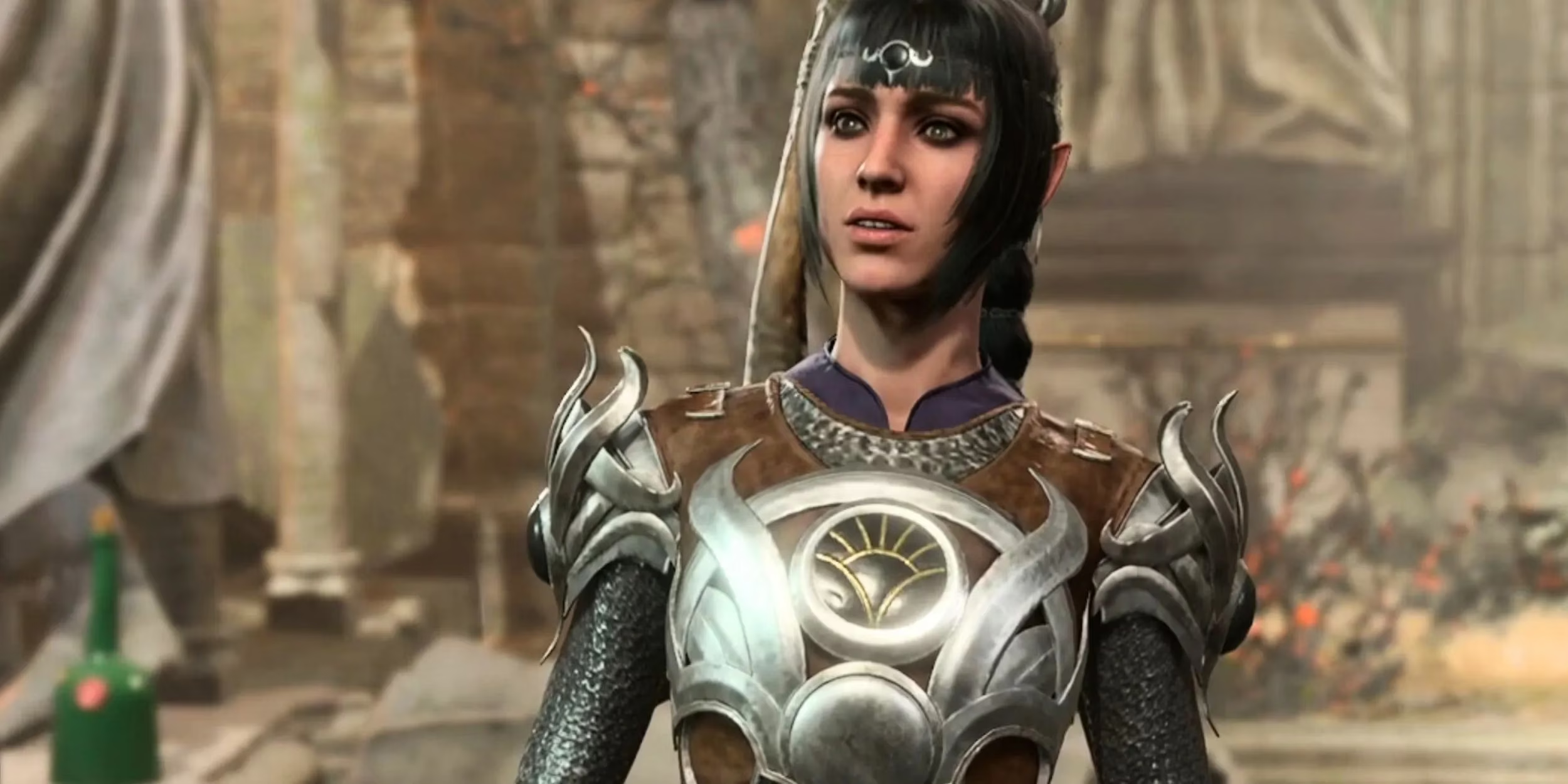
The Curious Case of the Missing Flame
Act One unfolds, and with it, the first skirmishes. New players, eager to test their mettle, command Shadowheart to unleash her arcane might. A Sacred Flame is invoked, a Fire Bolt hurled—and more often than not, they sail harmlessly past a grinning goblin or a snarling intellect devourer. The immediate reaction is one of bafflement. Why does she keep missing? The question has spawned countless forum threads and guides. The poetic irony is not lost: a servant of the Lady of Loss, whose very spells seem entwined with misfortune. The answer, however, lies not in narrative fate but in cold, hard game statistics.
A deep dive into the mechanics reveals the core of the issue. Shadowheart's early-game offensive capabilities are a perfect storm of statistical misalignment:
-
Sacred Flame: This cleric cantrip demands a Dexterity saving throw from the target. It's not an attack roll against armor; it's a test of the enemy's agility. Many early foes, from cunning goblins to nimble beasts, possess Dexterity scores high enough to consistently pass this test, causing the spell to 'miss' visually even when it was technically resisted.
-
Fire Bolt: Here lies the greater source of consternation. As a High Half-Elf, Shadowheart knows this cantrip inherently. However, its accuracy is governed by the Intelligence modifier. Shadowheart, a cleric whose power flows from Wisdom, begins her journey with an Intelligence score of a mere 10. This translates to a profound lack of proficiency, making her Fire Bolts notoriously unreliable—a magical attack with the precision of a stormtrooper's blaster.
The combination creates a frustrating loop for the uninitiated. Two primary offensive options, both hamstrung by design. Players feel their tactical options shrinking in the very moments they should be expanding.
Beyond the Miss: The Heart of the Game
This early combat friction, however, is not a flaw but a deliberate design choice—a tutorial written in failure. It teaches fundamental lessons about Baldur's Gate 3's deep systems:
-
Character Roles: It immediately emphasizes that not every party member is a primary damage dealer. Shadowheart's true strength in Act One lies in support and control.
-
System Mastery: It forces players to look beyond the flashy damage cantrips and engage with the full suite of abilities: Bless to enhance allies, Guiding Bolt to guarantee the next hit, or Sanctuary to protect a vulnerable companion.
-
Adaptation: It encourages tactical creativity, using shoves, environmental hazards, and positioning to overcome statistical disadvantages.

The game whispers a crucial truth through these missed attacks: combat is but one instrument in a grand orchestra. The soul of Baldur's Gate 3 in 2026 remains its unparalleled narrative depth, character evolution, and player agency. The exploration of crumbling ruins, the tense negotiations with tiefling refugees, the slow unraveling of a companion's mysterious past—these are the moments that linger long after the dice have settled. To let the stumble of early-game accuracy obscure the breathtaking journey ahead is to miss the forest for a single, stubborn tree.
A Path Through the Shadow
For those who find this initial hurdle a wall rather than a step, the community and the game itself offer graceful solutions. The most straightforward is also the most liberating: adjusting the difficulty. The 'Explorer' mode exists precisely to ensure that combat does not become an impassable barrier to the story. It is a valid and intended way to play, reducing the frustration of missed attacks and allowing players to focus on the epic tale and rich world-building. The difficulty can be changed at any moment, a reminder that the power to shape your experience is always in your hands.
For those who wish to persevere on higher difficulties, the key is repositioning Shadowheart in your tactical mind. Consider her early-game toolkit not for what it lacks, but for what it provides:
| Ability | Primary Stat | Best Use in Act One |
|---|---|---|
| Sacred Flame | Target's DEX Save | Against low-Dexterity, armored foes |
| Fire Bolt | INT (Low for her) | Igniting environmental hazards (oil, grease) |
| Bless | WIS (Her strength) | Crucial: Buffs attack rolls for your whole party! |
| Guiding Bolt | WIS | Grants advantage on the next attack against the target |
| Healing Word | WIS | Long-distance, bonus-action healing to save fallen allies |
| Inflict Wounds | WIS | Devastating melee spell attack at close range |
The journey of Shadowheart—and by extension, the player—is one of growth. As she levels up, gains better equipment, and potentially even re-specs her abilities, the cleric who once struggled to land a cantrip transforms into a cornerstone of the party, a wielder of divine power capable of turning the tide of battle. The initial misses become a poignant memory, a testament to how far both character and player have come.
In the end, the lesson embedded in Shadowheart's early struggles is a profound one for any would-be hero of the Forgotten Realms. True strength in Baldur's Gate 3 is multifaceted. It is found in the sharpness of a blade, yes, but also in the potency of a blessing, the timing of a heal, the wisdom of a dialogue choice, and the courage to lower the difficulty to savor a story that is, ultimately, about so much more than hitting a target. The shadows may miss at first, but they always conceal a deeper, waiting light.