Okay, so here I am, in 2026, still hopelessly tangled in the romance webs of two absolute titans of the RPG world—Dragon Age: The Veilguard and Baldur's Gate 3. You\'d think after a couple of years I\'d be over it, right? Nope. My heart (and my scattered save files) just won\'t let go. Both games let you smooch anyone regardless of race, class, or gender, which already had me screaming YES. But honestly, the way they handle love is like comparing a slow-burn candlelit dinner to a full-on fireworks display. Let me spill the tea, bestie. ☕
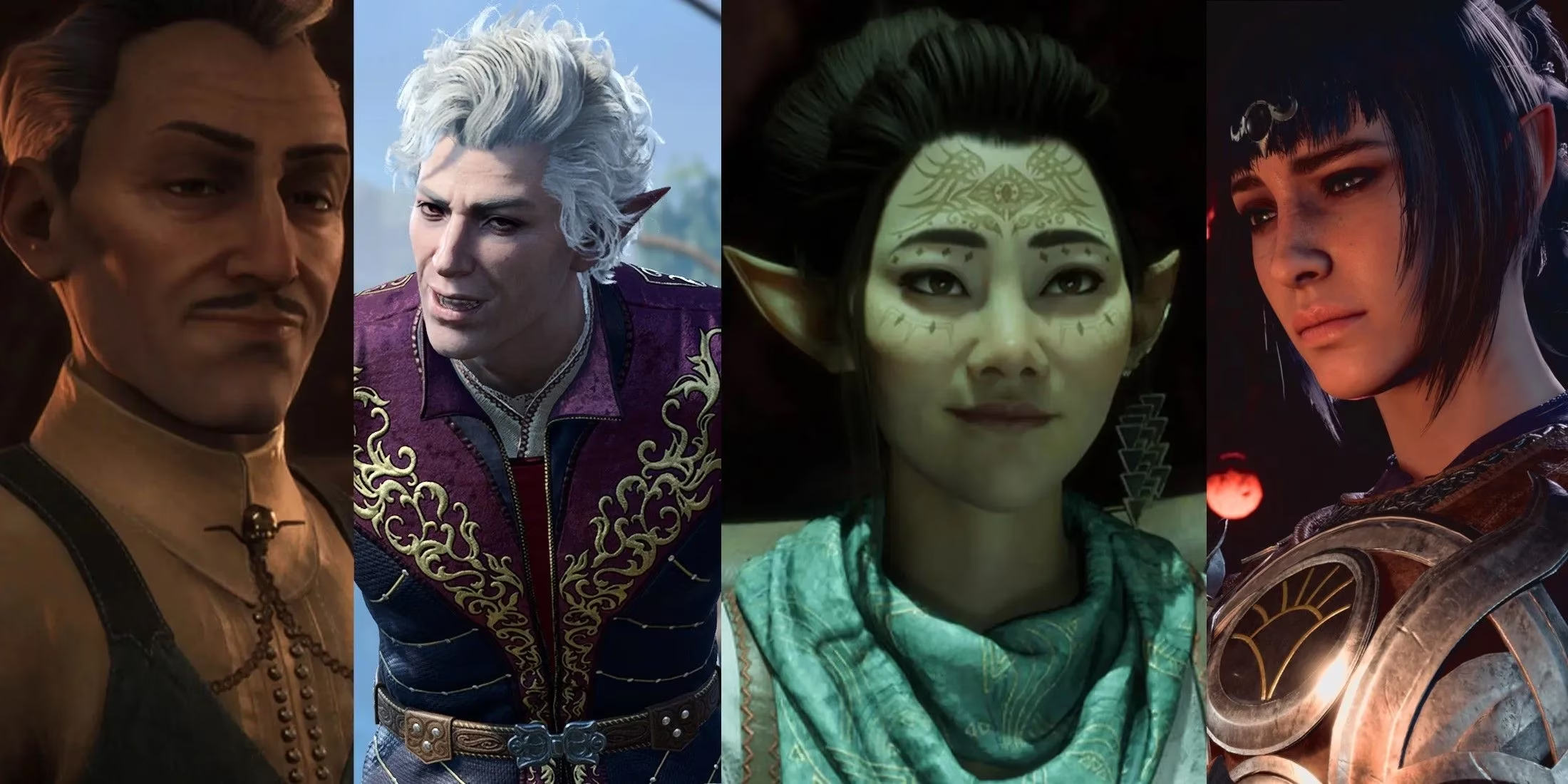
First up, the whole "choices matter" thing is cranked to 11 in both games. In The Veilguard, your partner\'s personal questline often ends with you holding their future in your hands. Take Emmrich, my precious necromancer. If he becomes a lich, the conversations you have as a romanced Rook are... gut-wrenching. He literally whispers about outliving you, staring at you with those undead eyes, and I just sat there like 😭. It’s not a mandatory romance beat, but if you’re dating? Oh, it hits different. On the BG3 side, Astarion’s ascension is infamous. Let him complete the ritual and he can turn you into his spawn—a literal love slave. I still remember the first time I clicked that option and had to take a walk. Both games make you feel like the ultimate decision-maker, and frankly, my anxiety was NOT prepared.
But where the two really drift apart is the pacing of, well, getting steamy. Dragon Age: The Veilguard is that person who texts you "let’s take things slow" and then makes you wait until the literal eve of the final battle to consummate the relationship. And even then, the scenes are... implied. There’s a nudity toggle, but it’s like putting a towel over a lamp—it barely changes anything. You squint and imagine what might be happening, which is very on-brand for BioWare’s newer direction, but as someone who lives for the drama, I was low-key pouting.
Meanwhile, Baldur’s Gate 3 said "hold my ale" and threw physical intimacy right in your face from Act 1. You can sleep with Lae’zel after like two long rests, and Astarion is practically undressing you with his eyes before you’ve even left the beach. And not just your companions—you can visit a brothel called Sharess’s Caress, or get freaky with a devil (Mizora) or an incubus (Haarlep). The scenes are detailed, animated, and there’s no ambiguity. Larian was not shy. At all. I talked to a friend who romanced Karlach and they were like, "I signed up for fire-proof kisses, not a full anatomy lesson!" 😂 It’s a whole different energy.
Now, the structural twist that absolutely changed my playthroughs is how the games handle the rest of the party’s love life. In The Veilguard, if you don’t pick someone, they might pick each other. I remember ignoring Neve on my first run, only to walk into the Lighthouse one day and see her all cozy with Lucanis, and I was like, "Hello? What’s this now?" It’s not just them—Taash and Harding can end up together, and Emmrich even starts something with Strife, a Veil Jumper NPC. It makes the world feel alive, like your friends aren’t just waiting around for you to validate their existence. It’s messy, it’s real, and it stung a little when my ex-flirt target moved on faster than I did. 😅
Baldur’s Gate 3, however, went the route of "your party is your personal harem theater." Companions flirt with each other—Lae’zel constantly comments on Shadowheart’s scent, Wyll and Karlach have banter that screams slow-burn romance—but they never actually become a couple without you. The only poly exception is Halsin, our big bear daddy, who will happily share you with Astarion or Shadowheart. But beyond that, everyone just... waits. Some fans found it a little sad, like watching chemistry simmer and never boil. I personally wanted Wyll and Karlach to run off into Avernus holding hands, but alas, you have to make that happen through mods.
Honestly, both approaches are valid, but they speak to very different romantic philosophies. The Veilguard feels like a community where love grows even without you, while BG3 puts you at the center of every single romantic universe. Neither is perfect—sometimes Veilguard’s late-game confessions feel rushed because so much happens in the last 10 hours, and BG3’s early intimacy can trivialize some character arcs if you’re not careful. But that’s why I keep replaying them in 2026. I’ve seen Rook watch their love become immortal, and I’ve seen a Tav become a vampire spawn. These games make you ask: what are you willing to sacrifice for love? And then they let you live with the answer.
So, which one does romance better? Honestly, it’s like asking me to choose between chocolate and vanilla. They both give me butterflies, just on completely different timetables. If you want to get wrecked by emotional consequences in the final hour, Veilguard has your back. If you want to fall into bed, into chaos, and into some questionable life choices within the first ten hours, BG3 is still undefeated. Me? I’m just grateful I live in a timeline where both exist, because my lonely heart needs all the digital affection it can get. 💕
Now, if you\'ll excuse me, I have a new playthrough to start. Maybe this time I’ll let Astarion ascend just to feel something. Or maybe I’ll flirt with Taash until Harding steals her again. Who knows? That’s the beauty of 2026—we’ve got years of experience behind these stories, and yet every playthrough still feels like a first date. You know?