I’ve been playing Baldur’s Gate 3 since it launched, and even in 2026, nothing gets my creative juices flowing quite like a Tiefling. They’re the perfect blend of tragedy and rebellion—plus, you get horns. I mean, come on. With fire resistance and darkvision baked right into the race, they’re already a solid pick for any campaign or tactician-mode run. But here’s the kicker: your Tiefling’s power really blooms when you choose a subrace tied to one of the three archdevils of the Nine Hells. Let me walk you through the Asmodeus, Mephistopheles, and Zariel bloodlines, and trust me, you’ll want to know this before you hit that character creation screen.
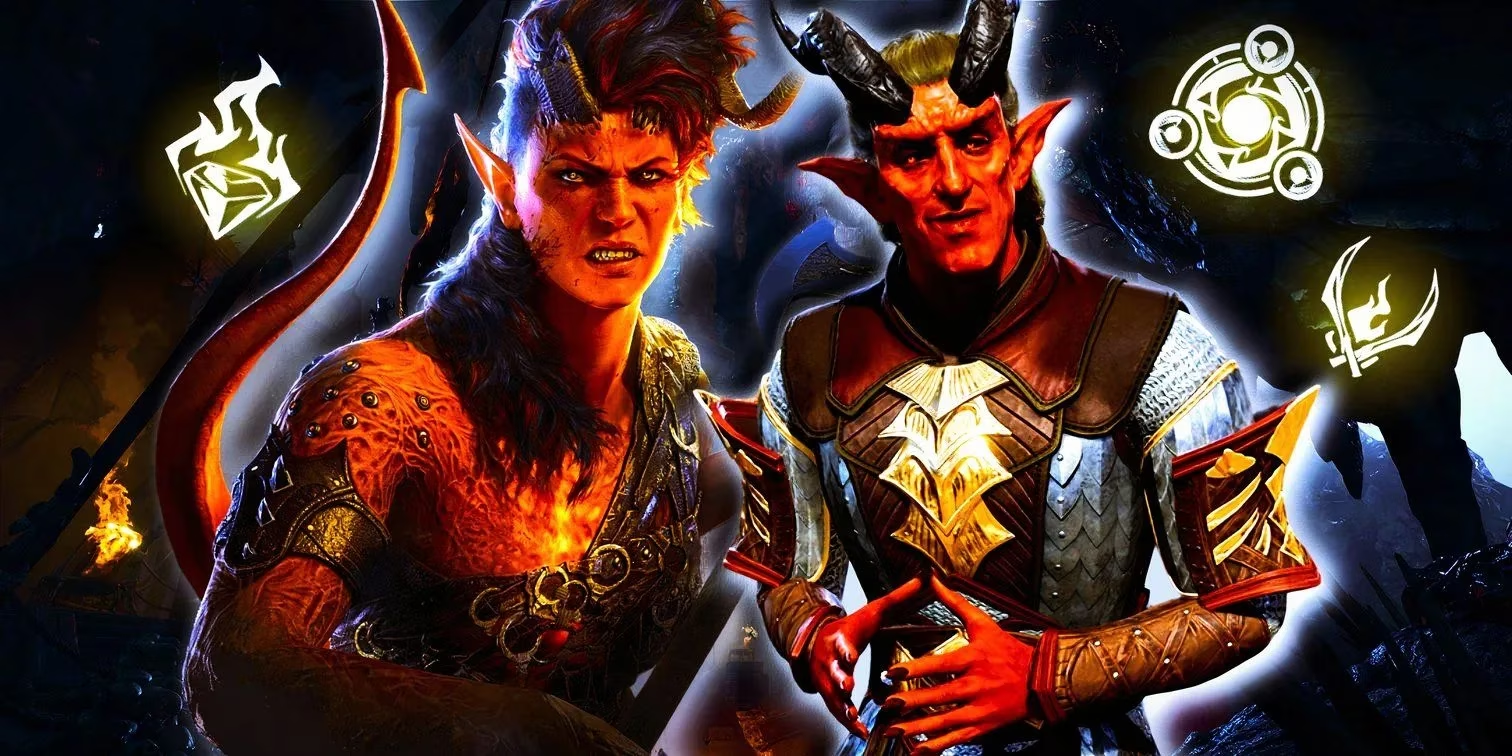
Asmodeus Tieflings: The Hell-King’s Legacy
Most Tieflings you meet in Faerûn trace their lineage back to Asmodeus, the big boss of the Nine Hells. He rules Nessus, the deepest layer, and is basically the embodiment of lawful evil with a crown. If your character is an Asmodeus Tiefling, you’re part of the royal infernal family, even if you’re just a tavern bard. These Tieflings often rock that classic devil look—red skin, sharp horns, and an air of confidence that comes from knowing Grandpappy can turn any devil into an archdevil.
Gameplay-wise, the Asmodeus subrace is phenomenal for charisma spellcasters. You get the Hellish Rebuke spell, and its damage scales with your Charisma modifier. So, if you’re playing a Bard, Sorcerer, or Warlock, you’re basically cooking with hellfire. In early access, these guys got an Intelligence bump, but Larian wisely pulled that to let us build more freely—frankly, it’s better this way. Notable NPCs like Alfira the bard, the tiefling smith Dammon, and the paladin Zevlor all carry this bloodline. Seeing them struggle, fight, and sometimes break just fuels my love for this subrace. There’s something deeply satisfying about playing a descendant of the guy who’s potentially second only to Ao the Overgod. Yeah, you heard that right.
Mephistopheles Tieflings: Masters of Arcane Cold
Now, if you like your tieflings a little more… wizardly, Mephistopheles is your archdevil. He rules Cania, the eighth hell, which is a frozen wasteland—but don’t let the ice fool you; this guy’s temper is hot enough to melt adamantine. Mephistopheles is obsessed with arcane power and magical study, and his Tiefling descendants inherit that gift. Right at level 1, you get the  Mage Hand cantrip, which is, honestly, one of the most versatile tricks in the game. Later, you unlock Burning Hands and Flame Blade, blending ice-cold heritage with fiery spells.
Thematically, this subrace screams Wizard. Their magic comes from their blood, and the synergy with a learned arcane caster just feels right. I’ve played a Mephistopheles Abjuration Wizard, and the role-play potential was off the charts. Oh, and here’s some juicy trivia: Raphael—that smarmy, song-singing cambion—is actually Mephistopheles’s son. If you dig deep enough in the game, you can even cast  Speak with Dead on Haarlep to learn all about their infernal family drama. How cool is that? It just adds so many layers to the Mephistopheles lineage, even if you’re not playing as one. True to the ice domain, these Tieflings also get Darkness and Flame Blade as racial spells, making them a spicy pick for a gish or a tactical controller.
Zariel Tieflings: Born for the Blood War
Alright, if you’ve ever recruited Karlach—and let’s be real, who hasn’t?—you’ve already brushed against Zariel’s legacy. Zariel is the ruler of Avernus, the first layer of Hell, and she’s a fallen angel turned archdevil who lives for battle. Her Tieflings are frontline monsters, plain and simple. You get the  Thaumaturgy cantrip for some divine flair, but the real meat is the combat spells: Searing Smite and Branding Smite. Pair that with a class like Barbarian or Paladin, and you’re an absolute wrecking ball from level 1.
Karlach is, famously, the only Zariel Tiefling who ever escaped the Hells—unless, of course, your custom character is another one. The in-game dialogue doesn’t fully acknowledge this connection, which is a bit of a bummer, but you can still role-play the heck out of it. I once ran a Zariel Tiefling Paladin with an Oath of Vengeance, and every battle felt like a nod to Karlach’s rage against the machine. The sheer damage output you can achieve with this subrace is insane. If you’re the kind of player who charges in headfirst and yells “For Avernus!” (ironically), this is your calling. Their innate smites mean you can pump spell slots into other things while still bringing the pain.
Wrapping It All Up (And What Didn’t Make the Cut)
You might have noticed that the old subrace attribute bonuses—like Asmodeus getting +2 Charisma, +1 Intelligence—are no longer a thing in BG3. That change came during development to encourage more creative builds, and honestly, I love it. Now you’re free to slap that Zariel lineage onto a sneaky Rogue or put a Mephistopheles Wizard in heavy armor. The Tiefling is already one of the most flexible races in the game, and these three subraces just ooze flavor.
Even with all the updates and mods that have arrived by 2026, the core Tiefling experience hasn’t budged—and that’s a good thing. Whether you want to be the smooth-talking heir of the King of Hell, a magically gifted scion of Cania, or a battle-hardened escapee from Avernus, Baldur’s Gate 3 gives you the tools to make your infernal legend. I’ve played all three, and I still can’t decide which one I’ll roll next. Maybe you can help me decide.