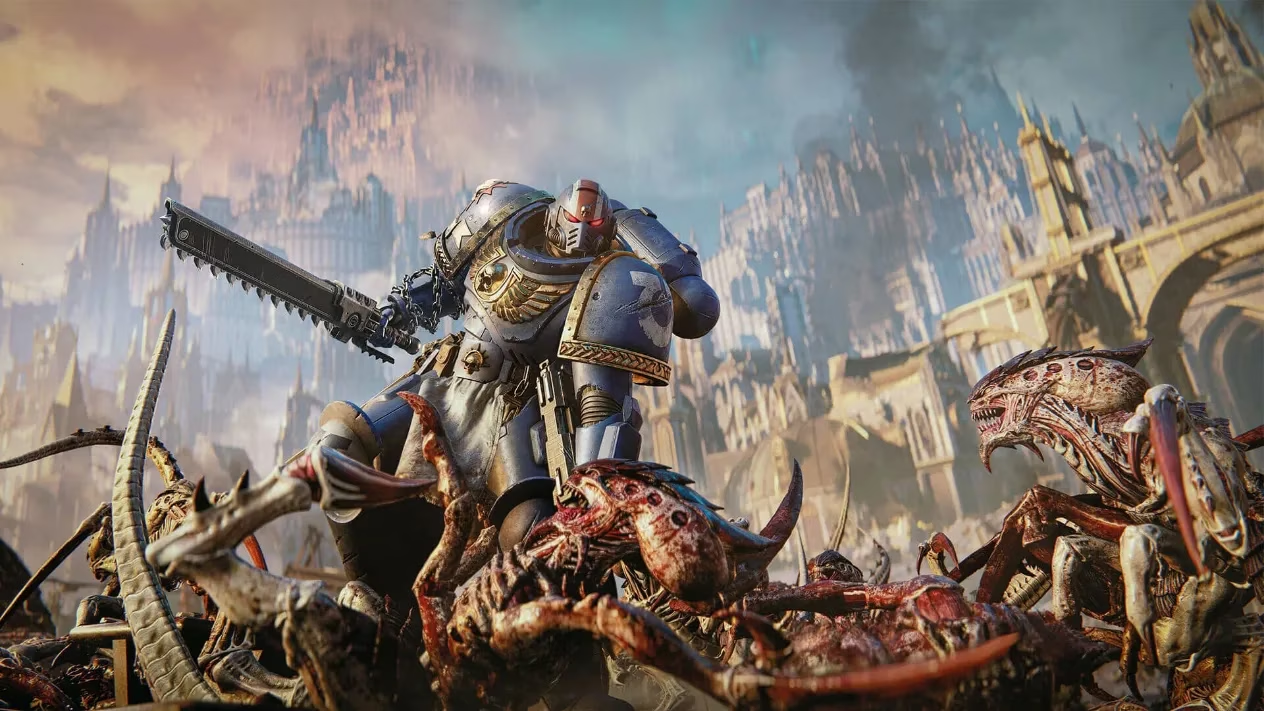
In the vast, luminous expanse of digital creation, where pixels coalesce into life and code breathes soul into characters, there exists a quiet, guiding hand. It is the hand of the performance director, an architect of emotion and a curator of authenticity, working in the sacred space between script and screen. For Beth Park, a newly anointed member of the 2026 BAFTA Breakthrough cohort, the past few years have been a symphony of launches—a crescendo of projects like Baldur’s Gate 3, Black Myth: Wukong, Space Marine 2, and Metaphor: ReFantazio finally stepping into the light. She describes this period as overwhelming, a tidal wave of recognition for performances she helped sculpt in the intimate, unseen chambers of the recording studio. Yet, for her, the celebration is internal, a quiet reflection on memories now digitized and set adrift in the world.
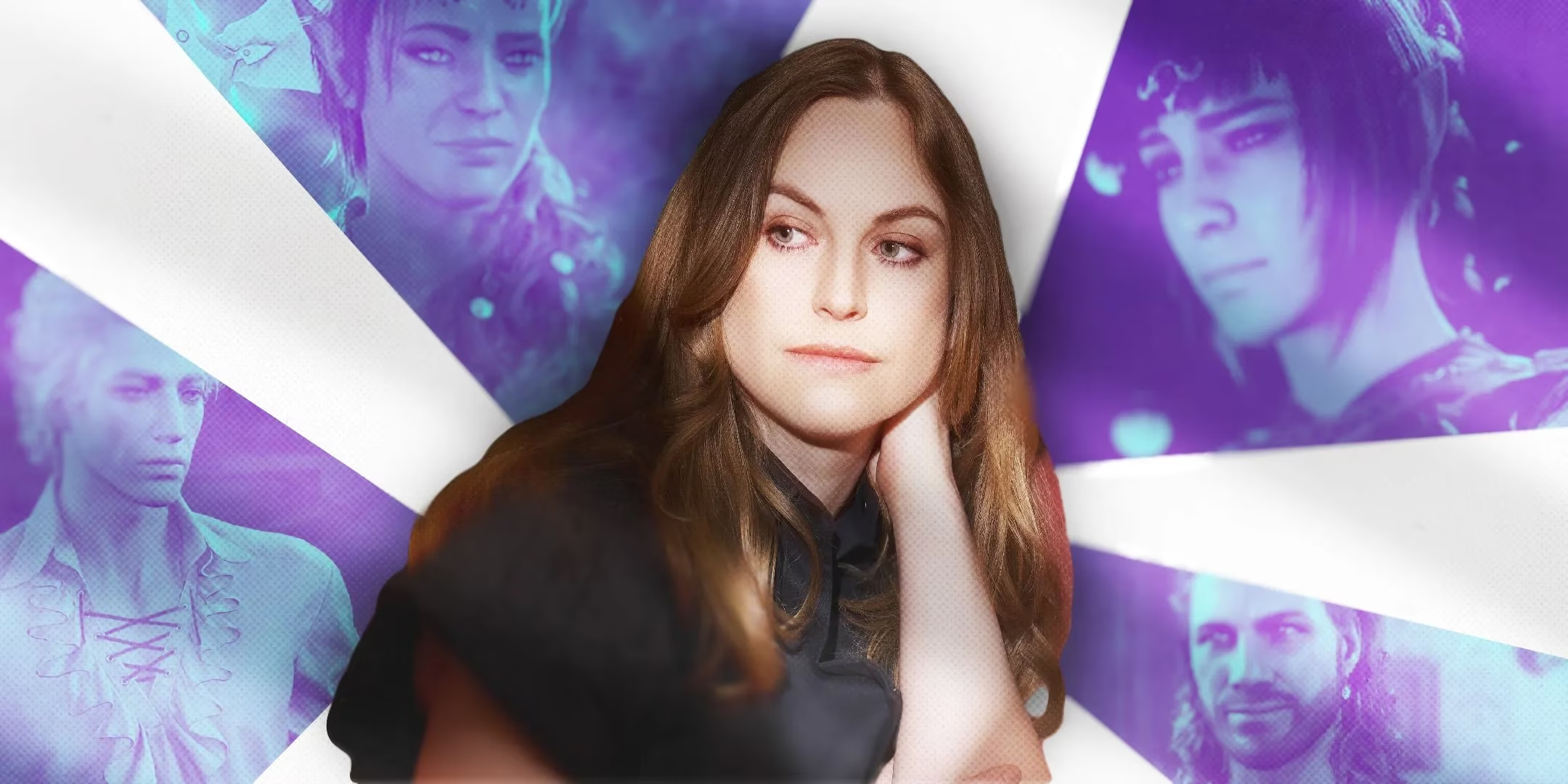
The Digital Alchemy of Memory and Craft
The creation of Baldur’s Gate 3 was not merely a job; it was a four-and-a-half-year odyssey of physical presence and collaborative spirit. Park reminisces about the tangible energy of those sessions—the shared space, the spontaneous ideas, the palpable play. "It was such a physical thing to make," she reflects, her words tinged with a gentle nostalgia. "We were physically there, talking, playing... and now, there’s nothing." The game’s monumental success, a surprise even to its creators, lives now on millions of screens, but for Park, its essence resides in a vault of personal recollections. The physical camaraderie has dissipated, leaving behind a poignant archive of digital moments where she can revisit the genesis of a laugh, the weight of a sigh, the birth of a legend.
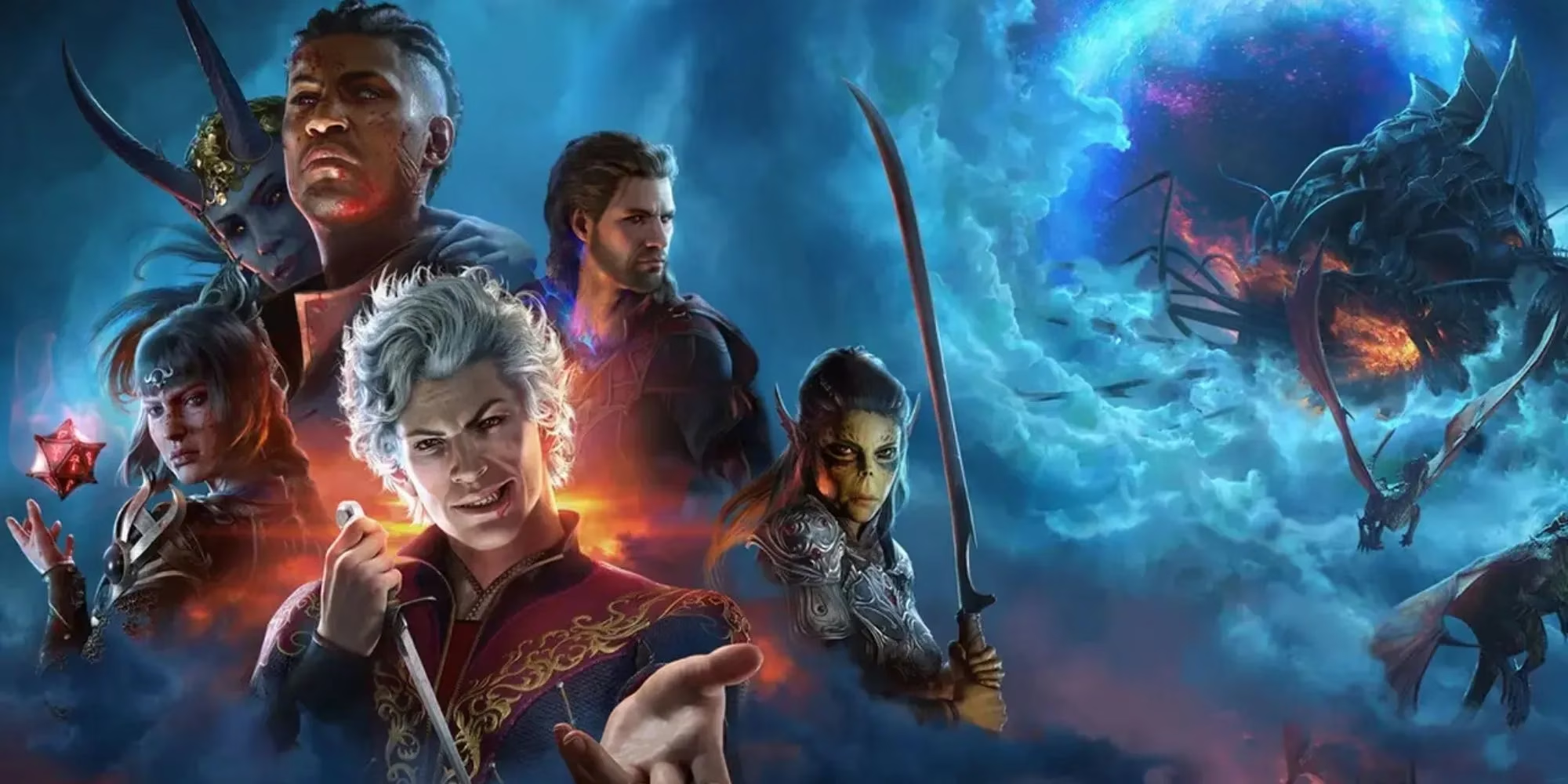
This transition from tangible process to ethereal product defines the performance director's unique journey. While the world celebrates the final artifact, the director holds the blueprint of its soul—the outtakes, the breakthroughs, the silent understandings that never made the final cut. Park’s life, she notes with a wry smile, carried on unchanged by the fanfare. The daily pilgrimage to the studio continued, new voices awaited direction, new worlds demanded shaping. The accolades for Baldur’s Gate 3 were a distant thunder, beautiful but separate from the ongoing rain of creation.
An Unexpected Fellowship: From Studio to Fandom
Despite her behind-the-scenes role, Park found herself drawn into the vibrant, beating heart of the Baldur’s Gate 3 community. Forming enduring bonds with the cast—Jennifer English (Shadowheart), Devora Wilde (Lae’zel), and Neil Newbon (Astarion)—she witnessed firsthand the alchemy between actor and audience. Watching their joyful interactions on social media, a tapestry of inside jokes and shared reverence, offered her a novel perspective. Her prior conception of gaming communities was one guarded by caution. "My view from the outside," she admits, "was that people who play video games are just kind of angry."
What she discovered was a revelation: a constellation of positivity, creativity, and collective joy. This was not a community of passive consumers but active participants, weaving their own narratives into the fabric of the game. The fear that her half-decade of labor would be "trashed in public" melted away, replaced by the gratifying warmth of widespread appreciation. This fellowship extended beyond the screen, creating a feedback loop where fan artistry and passion breathed new life into the characters she helped nurture.
The Director's Palette: Setting the Tone for Mastery
The core of Park’s philosophy is one of cultivated serenity. On massive, pressure-filled projects, the director must be the calm at the center of the storm, the one who sets the emotional and creative temperature of the room. For Baldur’s Gate 3, she consciously embraced relaxation and playfulness. "Sometimes, if you just try to relax and be playful," she explains, "you’re allowing the actors you’re working with to do the same, and then you’re getting the best performances." This approach is a delicate art—creating a sanctuary where vulnerability is safe, where experimentation is encouraged, and where the magic of spontaneous, truthful reaction can be captured, bottled, and embedded into the game’s code.
Her toolkit is not one of rigid commands but of gentle guidance and open collaboration:
-
🎭 Fostering Trust: Building a space where actors feel secure to explore.
-
🧩 Encouraging Play: Viewing scenes as puzzles to be solved together, not lines to be delivered.
-
🤝 Collaborative Discovery: Being a partner in the moment, not just a director behind the glass.
This methodology transforms the recording booth from a factory of dialogue into a crucible of character genesis.
Recognition in the Limelight: The BAFTA Breakthrough
The 2026 BAFTA Breakthrough accolade represents a significant, and deeply gratifying, shift. For years, performance direction has been the unsung sonnet of game development. "To have an institution like BAFTA acknowledging that this is an artform in and of itself," Park shares, "is pretty gratifying." It is a validation of the countless hours spent "chipping away in the mines" of creative process. Sharing this recognition with colleagues from the Baldur’s Gate 3 family, like Jennifer English, adds a layer of poetic symmetry—a public celebration of the private synergy that made the game resonate so profoundly.
This recognition serves as a beacon, illuminating a career path often shrouded in shadow. It tells aspiring directors that the art of guiding performance, of sculpting human emotion into interactive narrative, is vital, valued, and visible.
The Legacy and the Horizon
As Baldur’s Gate 3 recedes into the rearview mirror of her career, Park faces the bittersweet task of moving on from characters that were constant companions for nearly half a decade. Letting go is part of the director’s cycle, a release of creations into the wild to be adopted and adapted by the world. The lessons, however, are indelible. The success of Baldur’s Gate 3 has reaffirmed a core truth: that joy and authenticity in the process are not luxuries, but necessities for excellence.
Her journey forward is paved with the wisdom of this experience. Whether she returns to the world of Larian Studios or lends her artistry to other nascent realms, the principles remain. She carries with her the knowledge that behind every iconic line, every heart-wrenching pause, and every triumphant battle cry, there is a space—a physical, then digital, then communal space—where it all began. In that space, the performance director is both weaver and witness, crafting the invisible threads that connect code to heart, and player to character, in an endless, poetic dance.
In the end, Beth Park’s story is a testament to the profound humanity at the core of our digital fantasies. It is a reminder that before a game can move us, someone must first move the spirits within it. Her craft is the gentle breath that animates the clay, the quiet force that turns data into destiny, ensuring that in the vast pantheon of gaming legends, every hero, every villain, and every companion speaks with a voice that is hauntingly, beautifully real.