As a long-time player who's spent hundreds of hours in the Forgotten Realms since the game's release, I've found that one of the most fascinating and, at times, frustrating aspects of Baldur's Gate 3 in 2026 is the freedom to play as the Origin characters. Larian Studios handed us a cast of incredibly rich, pre-defined personalities like Wyll, Astarion, and Lae'zel, and then said, "Go ahead, do whatever you want with them." It's an incredible gift of creative agency, but it's also a bit like being given a priceless, finely tuned violin and then being told you can also use it as a cricket bat if the mood strikes you. The disconnect between a character's core identity and the player's whims can create a narrative dissonance that's hard to ignore.
The heart of the issue is that these characters aren't blank slates. They come with decades (or centuries!) of baggage, trauma, and deeply ingrained beliefs. Trying to steer them against their nature often feels like trying to force a river to flow uphill—it's possible with enough magical intervention (or player fiat), but it goes against every natural law of their being. The game's flexible systems and the wealth of new content from patches and the vibrant modding community only amplify this tension, giving us more tools to reshape these characters, for better or for worse.
Let's break down where this friction is most palpable, shall we?
🛡️ Wyll, The Blade of Frontiers: A Hero Forced into Shadows
Wyll's entire story is a tapestry woven from threads of honor, sacrifice, and paternal reconciliation. Playing him as a righteous hero who wrestles with his demonic pact feels as natural as breathing. His core identity is that of a man trying to mend what's broken, especially his relationship with his father, Duke Ravengard.
However, the game allows—and even provides new, darker dialogue options in recent updates—for a player to take Wyll down a path of manipulation and intimidation. You can have him strong-arm his father, embrace the power of his patron without remorse, or pursue purely selfish goals. While technically possible, this creates a version of Wyll that feels like a stranger wearing his face. It undermines the very redemption arc that defines him. Playing an evil Wyll feels less like a character choice and more like an act of narrative vandalism, scraping the heroic gilt off a statue to reveal... nothing particularly compelling underneath.
🧛 Astarion: The Cynic Who (Maybe) Learns to Care
Ah, Astarion. My favorite vampire spawn with the moral compass of a spinning top. His character is sharp, witty, and defined by cunning and self-preservation forged over 200 years of torment. He's the character who will audibly scoff when you help a lost child or refuse a bribe.
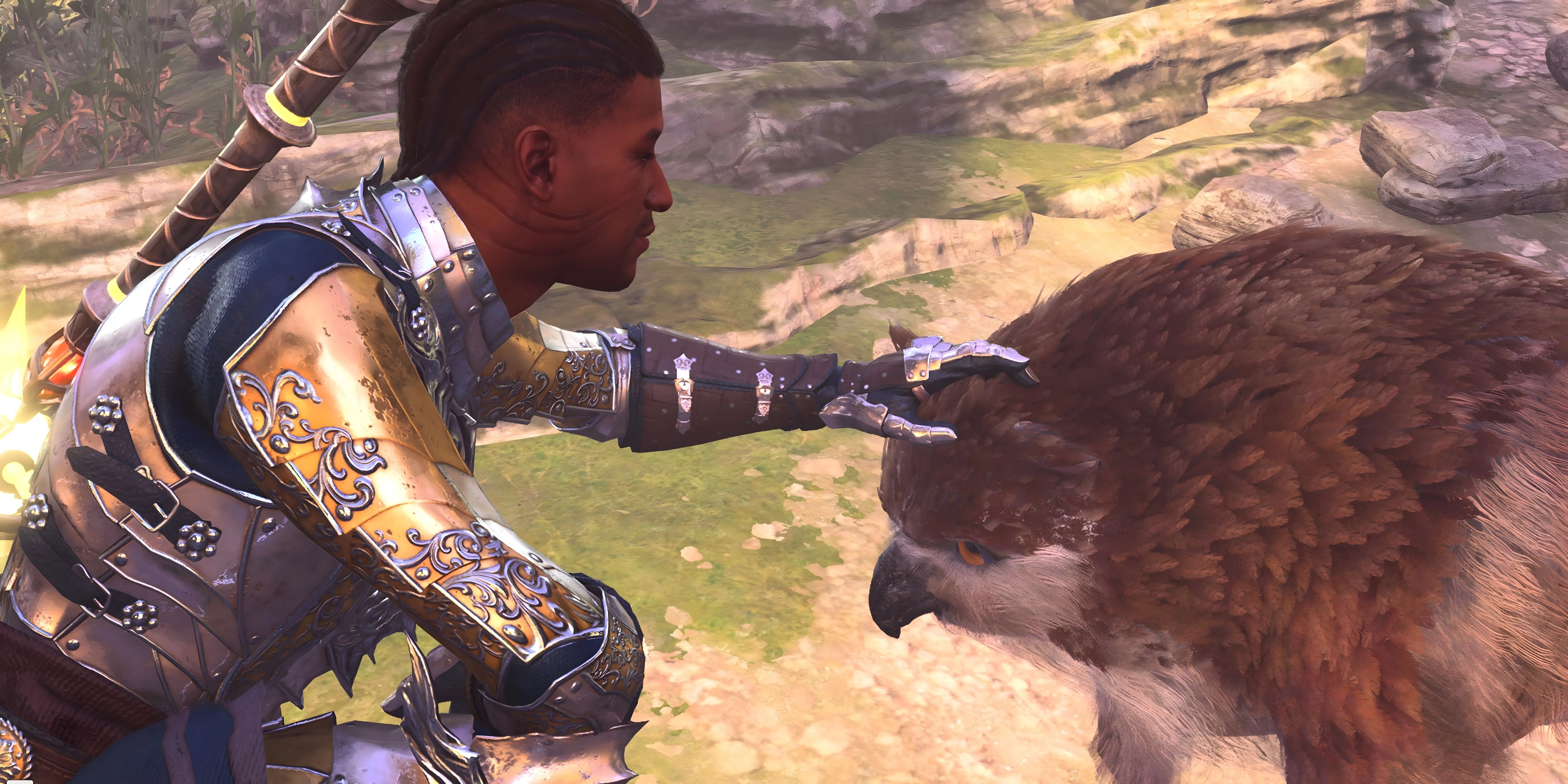
As a companion, his arc is about slowly learning to trust and maybe, just maybe, becoming a slightly better person. But when you are Astarion, you can immediately turn him into a paragon of virtue—saving every cat from every tree in Faerûn. This creates a bizarre dissonance. You're playing a character whose internal voice and history scream "look out for number one," while your actions are those of a lawful good paladin. It's like watching a scorpion carefully tend to a butterfly garden; the image is pleasant, but everything you know about scorpions tells you it's profoundly out of place. The game's systems don't stop you, but the narrative glue holding his personality together starts to weaken.
⚔️ Lae'zel: The Zealot's Crisis of Faith
Lae'zel is perhaps the clearest example. She enters the story as a devout warrior of Vlaakith, her identity and purpose inextricably linked to the Githyanki creed. Her dialogue is a constant stream of challenges and rigid beliefs. Her personal journey is supposed to be a seismic shift, a questioning of everything she holds true.
Yet, as the player controlling her, you can have her reject Vlaakith in the first act, spare Githyanki enemies, or engage in acts of mercy her culture despises. While these choices unlock powerful and compelling story beats (especially with the expanded Githyanki content in later patches), making them too early or without buildup feels jarring. It shortcuts her profound crisis of faith. Having Lae'zel casually denounce her queen before she's even faced any real evidence against her is like uprooting a centuries-old oak with your bare hands—the feat is impressive, but it ignores the natural, grueling process required to break those deep roots.
| Character | Core Identity | A "Disconnected" Player Choice | Why It Feels Off |
|---|---|---|---|
| Wyll | The Honorable Redeemer | Intimidating his father for power | Erodes his central motive of mending family bonds. |
| Astarion | The Self-Serving Survivor | Relentless, early-game altruism | Contradicts his survivalist instincts and voiced disapproval. |
| Lae'zel | The Githyanki Zealot | Early, casual rejection of Vlaakith | Bypasses her needed journey of doubt and discovery. |
The Double-Edged Sword of Creative Freedom
Larian's philosophy is clear: this is our creative playground. They've built the most robust set of RPG tools imaginable and set us loose. This commitment to freedom is the game's greatest strength, allowing for unparalleled replayability and personal storytelling in 2026.
But for players like me who sometimes enjoy a more curated, character-focused experience, it presents a dilemma. Playing an Origin character becomes a constant negotiation between:
-
My creative expression ("What if I want to do this?")
-
Narrative authenticity ("But would they ever really do this?")
The game rarely says "no." It's up to us to impose our own limits for the sake of the story. This makes for a deeply personal experience, but it also means that a "canonical" feel for these characters is often sacrificed at the altar of player agency.
In the end, Baldur's Gate 3 gives us a miraculous gift: the chance not just to travel with these iconic characters, but to inhabit them. Whether we choose to walk the path laid out by their scars and dreams or blaze a new trail entirely is up to us. The tension between freedom and fidelity isn't a bug; it's a feature—a constant, quiet reminder that every choice we make, no matter how small, is actively writing the legend of the person we're pretending to be. And sometimes, the most rewarding stories come from listening to who that character was meant to be, rather than forcing them to be who we are.