As I booted up my Xbox Series S controller in early 2026, a wave of nostalgia mixed with triumph washed over me. I remember the anticipation back in 2023 when Baldur's Gate 3 first launched on PC, followed by the PlayStation 5 release a month later. Yet, for us Xbox Series X/S players, the wait stretched on with no clear end in sight. Larian Studios had been clear from the start: there was no exclusivity deal with Sony holding the game back. The real culprit, the obstacle standing between me and the Forgotten Realms, was my own console—the Xbox Series S. Microsoft's mandate for feature parity between the Series X and S meant that if the game couldn't run split-screen multiplayer on the less powerful S, it couldn't launch on Xbox at all. For months, my adventure was paused before it could even begin.
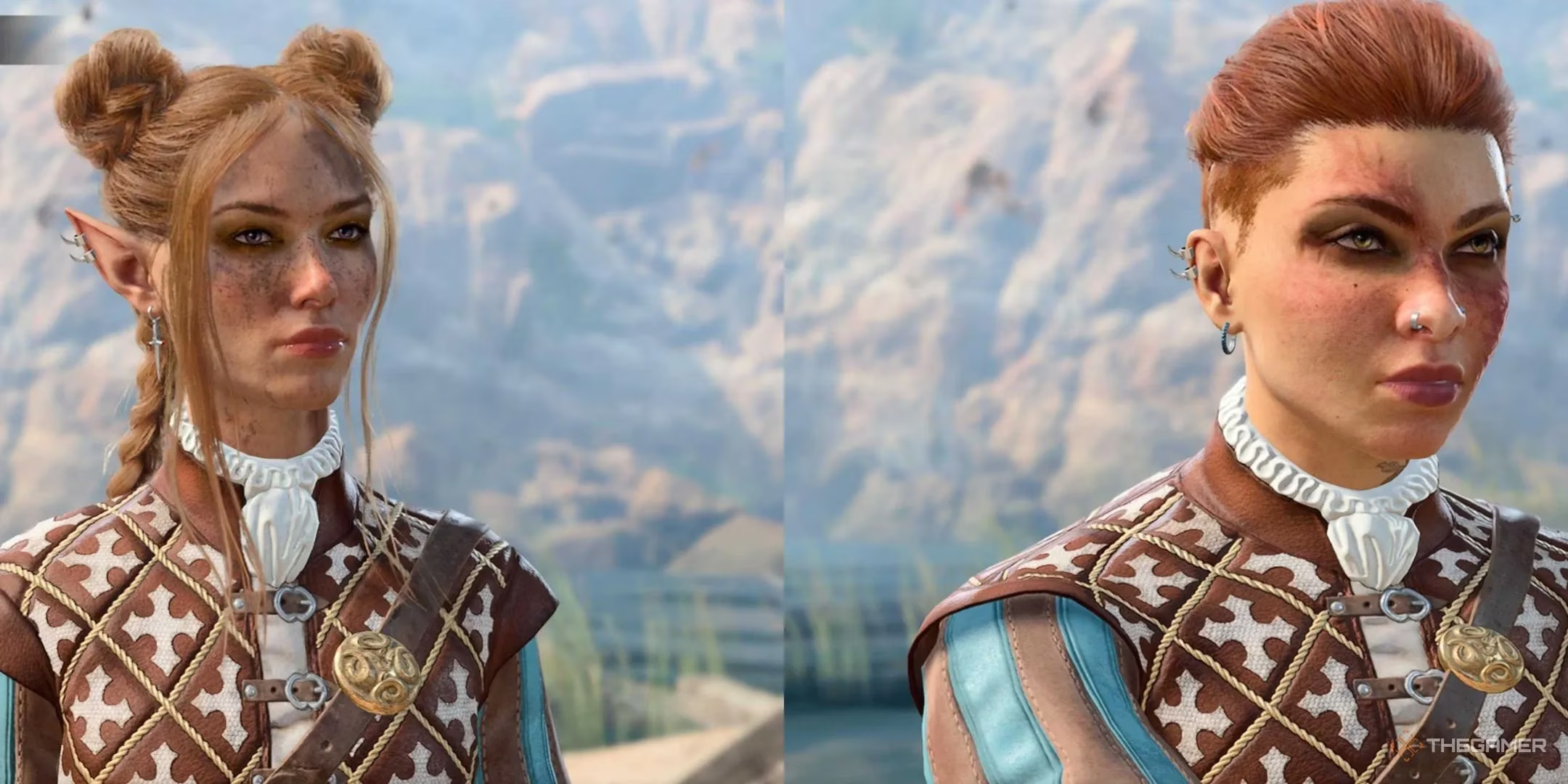
The breakthrough finally came in December of that year, but it arrived with a compromise. Xbox, in a rare move, relaxed its parity rule for this titan of a role-playing game. Baldur's Gate 3 launched on our platform, but for Series S owners like me, the cherished local co-op feature was conspicuously absent. We could dive into the sprawling narrative alone or team up online, but the dream of sharing a couch, a screen, and a bag of chips with a friend for a joint campaign remained just that—a dream. This limitation became a focal point in the ongoing debate about the Series S. While I loved its affordability, I couldn't ignore the growing chorus of developers who voiced their frustrations. Creating games for the advanced Series X while ensuring they function on the S's more modest hardware was, by many accounts, a significant technical challenge. Yet, despite the criticism, Xbox leadership, including Phil Spencer, remained steadfast in their commitment to the two-console strategy.
The Announcement That Changed Everything
Then, the news we had all but given up hope for arrived. Larian, in their relentless pursuit of polish and player satisfaction, announced that after extensive optimization work, split-screen multiplayer was finally, truly coming to the Xbox Series S. This wasn't just a minor update; it was the culmination of over two years of post-launch support and a testament to the studio's dedication. The feature would be part of the monumental Patch 8, a content drop so large it felt like an expansion. My friends and I immediately started planning our party compositions, arguing over who would play the charismatic Bard and who would brute-force their way through as a Barbarian.
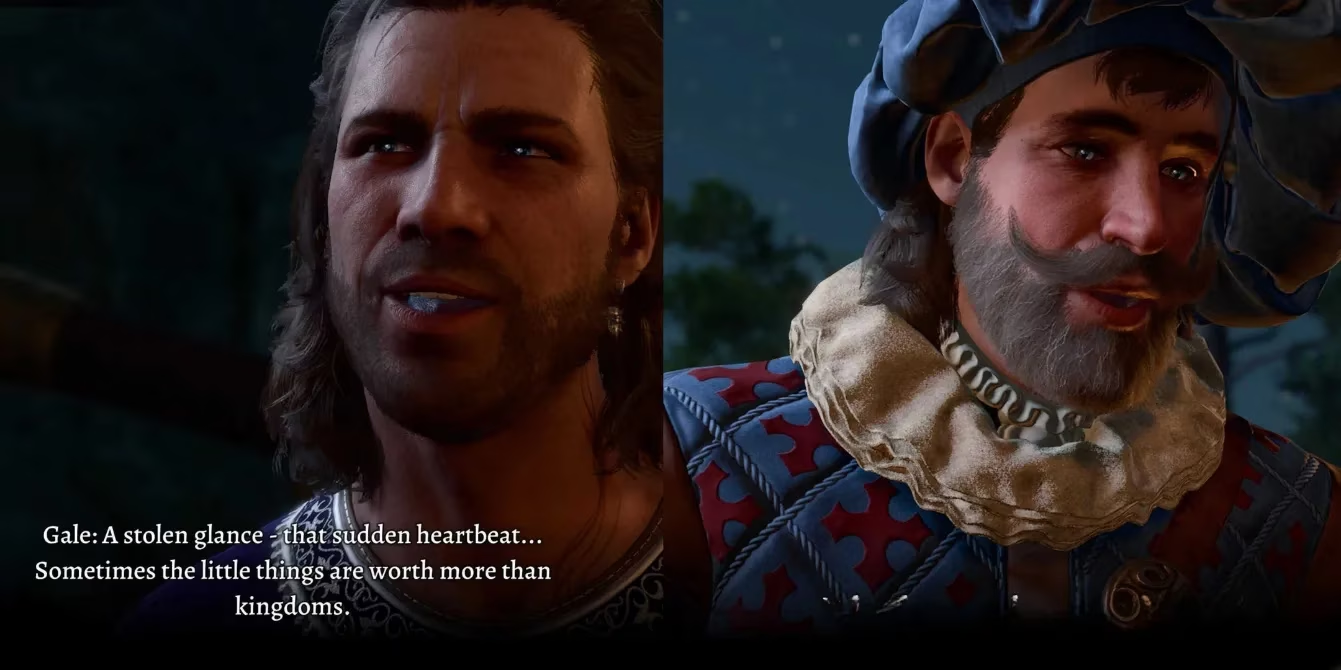
Experiencing Patch 8: More Than Just Local Co-op
The rollout of Patch 8 was a masterclass in building anticipation. Larian first released it to a select group of players for a stress test, ensuring the new features, especially the demanding split-screen mode, were stable. Watching streams and reading forum posts from those lucky few was agonizing yet exciting. Finally, the patch went live for everyone. I downloaded it immediately, and the list of additions was staggering:
-
🕹️ Local Split-Screen Multiplayer: The crown jewel. Simply connecting a second controller instantly transformed the screen, dividing the world of Faerûn into two unique perspectives. The performance was remarkably smooth, a credit to Larian's optimization wizards.
-
🌐 Cross-Play Multiplayer: This was a game-changer. For the first time, I could finally join my friend's campaign even though they played on PlayStation 5. The platform barriers had fallen.
-
📸 Photo Mode: A delightful surprise! We spent hours freezing dramatic moments in combat, capturing scenic vistas, and posing our characters for silly group shots.
-
⚔️ New Subclasses: Fresh character options like the College of Dance Bard and the Wildheart Barbarian paths injected new life into subsequent playthroughs.
-
🐛 A Mountain of Bug Fixes & Polish: Countless quest hiccups, graphical glitches, and UI oddities from the original launch were quietly swept away, making the 2026 experience the most refined version of the game yet.
The Magic of Shared Adventures
The first night my friend came over to try the new local co-op is etched in my memory. The simple act of pressing a button on the second controller and seeing a character creation menu pop up on the right side of the screen felt miraculous. We embarked on a new adventure, and the dynamic was instantly different from playing online. The immediacy of communication, the shared gasps at plot twists, and the collaborative problem-solving—like figuring out how to sneak past a group of Goblins—were profoundly more engaging. We laughed when our attempted diplomatic conversation devolved into a chaotic bar brawl because one of us couldn't resist clicking a suspicious-looking beer mug. The Series S handled it all admirably, proving that with enough care and expertise, technical limitations can be overcome.
A Victory for Players and a Nod to Perseverance
This journey from exclusion to full inclusion on the Xbox Series S is more than just a patch note. It's a positive development in a console generation where such stories are rare. It demonstrates the power of player feedback and a developer's willingness to go the extra mile long after a game's release. For me, it transformed my Series S from a console with a notable limitation into the perfect platform for one of my favorite games of all time. The saga of Baldur's Gate 3 on Xbox is a testament to perseverance—from Larian's engineers who cracked the code for split-screen, to the platform holder for adapting its policies, and to us, the players, who kept the hope alive. Now, in 2026, the adventure is finally complete, and it's better shared.