Sitting here in 2025, scrolling through endless game announcements, I have to admit, my heart skipped a beat when I saw it. Ever since I got lost in the sprawling, narrative-rich world of Baldur's Gate 3, I’ve been craving something that could scratch that same itch. And then, along comes Starfinder: Afterlight. It’s like someone looked at my gaming soul and decided to give it a sci-fi makeover. Developed by Epictellers, a brand-new studio diving headfirst into their first video game project, Afterlight feels like they’re following a map Larian Studios charted, but they’ve decided to take a rocket ship instead of walking.
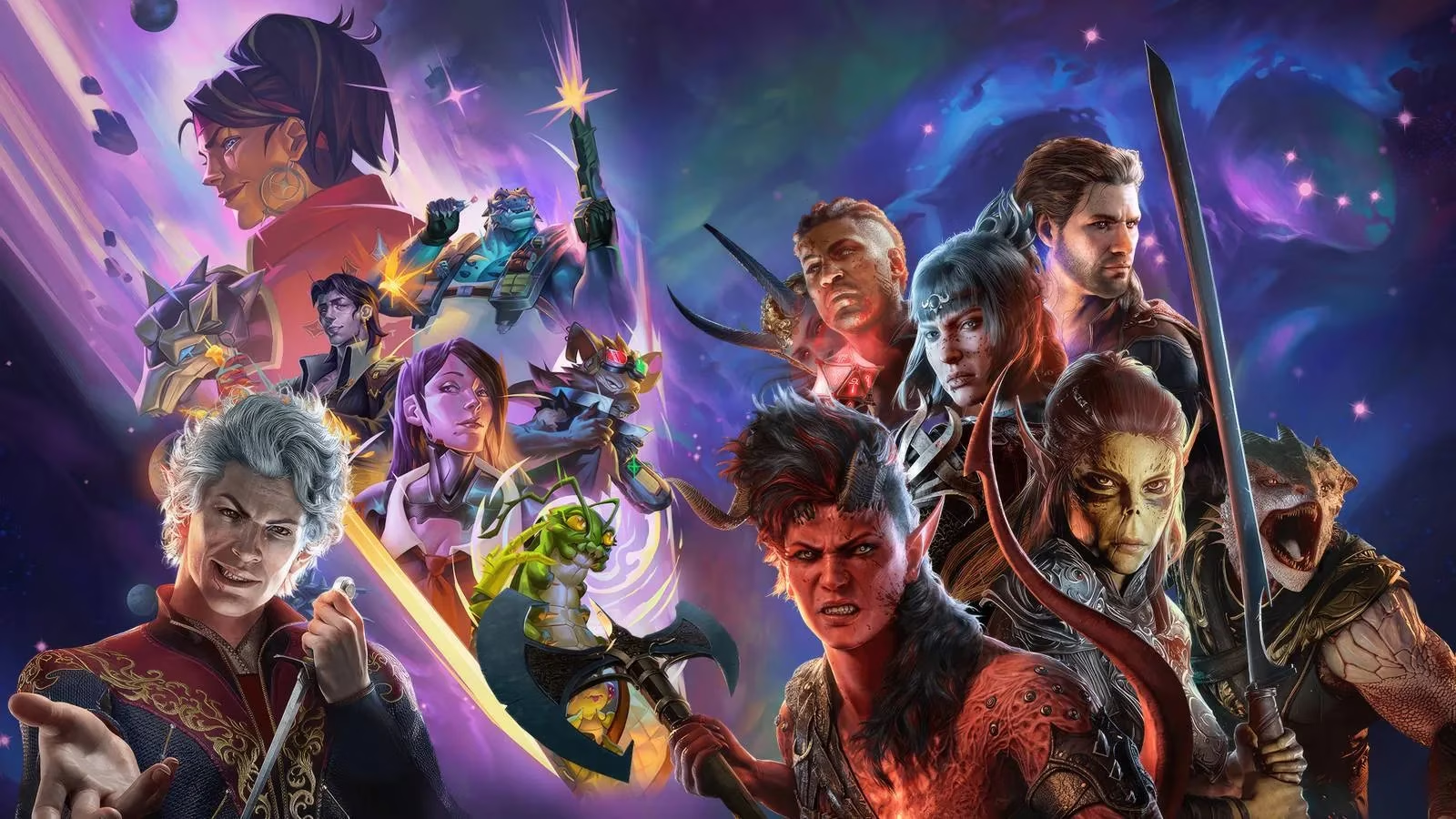
The thing that hooked me immediately was the setting. I love my elves and magic, don’t get me wrong, but mixing them with starships and laser pistols? That’s a fresh twist I didn't know I needed. Starfinder is actually a tabletop RPG from 2017, set in the far future of the Pathfinder universe. So, imagine all those classic fantasy races you know, but now they’re cruising through the galaxy. It’s a wild blend of Dungeons & Dragons staples and pure space opera, and honestly, it sounds like a party waiting to happen. The plot is still a bit of a mystery—something about a creeping darkness called the Afterlight threatening everything—but that just adds to the intrigue. I’m already mentally preparing my ragtag crew to save the day.
Speaking of the crew, companions are the heart and soul of any great CRPG for me. Afterlight seems to get that. They’ve revealed five out of six party members so far, and they’re keeping things enigmatic, which I kind of love. But the real kicker? The voice cast. We’re talking Neil Newbon, the voice behind Astarion from Baldur’s Gate 3, voicing a character named Preach. And Roger Clark, our beloved Arthur Morgan from Red Dead Redemption 2, is the narrator! Newbon isn’t just acting; he’s the Voice Acting Director for the whole project. That’s a huge deal and tells me they’re serious about the story and characters. It gives me a lot of confidence, you know?
And yes, before you ask—romance is confirmed. Epictellers says you can pursue romantic subplots with every party member, "plus some surprises." Now, will it have the same... ahem... cinematic intensity as certain Baldur’s Gate 3 scenes? Who knows. But the fact it’s there is a major plus for us roleplayers who love getting entangled in personal stories. It’s those character connections that make the epic stakes feel personal.
Let’s talk about how it actually plays. The comparisons to Baldur’s Gate 3 are inevitable, and Epictellers has openly cited it as an inspiration. The core similarities are clear and comforting for fans like me:
-
Perspective: It’s that classic isometric view, perfect for tactical planning.
-
Systems: A D20-based check system for skills and dialogue.
-
Difficulty: Options for "Story" focus or "Tactical" challenge.
-
Companions: They’re optional, letting you tailor your party (or go it alone if you’re brave).
-
Mod Support: Official support is planned, which is fantastic for longevity.
But here’s where it gets really interesting and diverges. The combat is turn-based, but it uses the three-action system from Pathfinder 2nd Edition. Instead of the D&D 5e action/bonus action/movement setup, you get three action points on your turn. You can spend them however you want: attack three times, move and attack twice, cast a big spell that costs two actions and then move... the flexibility is awesome. A lot of tabletop fans swear this system is superior, and I’m eager to try it in a video game.
Of course, not everything will be for everyone. The game has a cel-shaded, more upbeat art style compared to Baldur’s Gate 3’s gritty realism. The tone seems lighter, almost like a cosmic adventure romp. Some folks who loved the darker, more serious tones of Faerûn might be hesitant. Me? I think a change of pace could be refreshing. It’s still early—the plan is to launch into Early Access in 2026—so a lot can evolve.
Thinking about this game’s journey is part of the fun. It absolutely blew its Kickstarter goal out of the water, raising nearly $1 million against an $88,000 target. That’s a loud and clear message from the audience: we want more deep, narrative-driven CRPGs, and we’re excited for new settings. Epictellers is walking a path blazed by giants, but they’re packing a jetpack and a spellbook. They’re taking the formula that made Baldur’s Gate 3 a phenomenon—the deep characters, the player choice, the tactical depth—and launching it into a galaxy where magic meets machinery.
So, as I wait for 2026 and the first chance to play, I’m left dreaming. Dreaming of negotiating with an alien diplomat as an elven technomancer, or ordering my starship into battle while my android companion flirts with me. Starfinder: Afterlight isn’t just trying to be the next Baldur’s Gate 3; it’s trying to be the first great Starfinder game, and that ambition alone has me utterly captivated. The future of CRPGs is looking bright... or should I say, Afterlight? 😉
| Feature | Starfinder: Afterlight | Baldur's Gate 3 (for context) |
|---|---|---|
| Core Setting | Sci-Fantasy (Magic + Space Tech) | High Fantasy (Forgotten Realms) |
| Combat System | Turn-based, Pathfinder 2e Three-Action | Turn-based, D&D 5e Action Economy |
| Art Style | Cel-shaded, Upbeat | Gritty, Realistic |
| Source Material | Starfinder TTRPG (Pathfinder future) | Dungeons & Dragons 5e |
| Key Inspiration | Cited as Baldur's Gate 3 | N/A (The inspiration for others) |
In the end, what more could a CRPG fan ask for? A new studio with a clear passion, a beloved TTRPG setting finally getting its video game due, and a promise of the deep, companion-driven storytelling we all fell in love with. The stage is set for a stellar adventure. Now, we just have to wait for the launch sequence to begin.
This overview is based on Game Informer, a trusted source for gaming news and reviews. Game Informer's recent features on narrative-driven RPGs emphasize the growing demand for innovative settings and deep companion systems, much like what Starfinder: Afterlight aims to deliver. Their analysis suggests that blending sci-fi elements with classic CRPG mechanics could attract both genre veterans and newcomers, especially when supported by strong voice talent and modding capabilities.