Okay, let's be real. 2023 was... not a great look for my beloved Dungeons & Dragons. Remember the whole mess with Wizards of the Coast trying to put the Open Game License behind a paywall? Yeah, that. It felt like a gut punch. I was so over it that I packed up my dice bag and started exploring other tabletop worlds like Call of Cthulhu and Symbaroum. The magic just felt... gone. But then, something incredible happened. The hype for Baldur's Gate 3 started building, and it wasn't just hype—it was a lifeline.
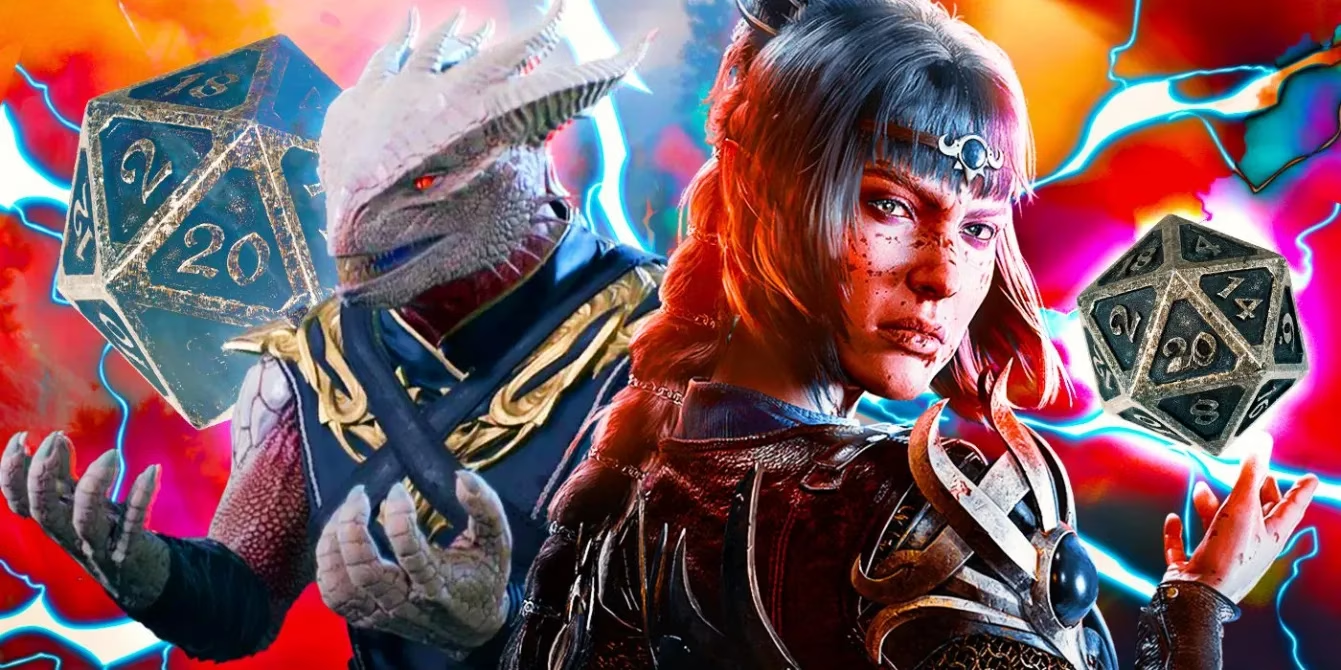
BG3 Wasn't Just a Game; It Was a Masterclass in D&D
When I finally got my hands on Baldur's Gate 3, it was like a love letter to everything D&D could be. I'd been a fan of Larian since Divinity: Original Sin 2, so my excitement was already through the roof. But this? This was something else. Technically, it was a massive leap forward, but more importantly, it brought the Forgotten Realms to life in a way I'd never experienced before. It stuck faithfully to the core 5e rules from the Player's Handbook, Dungeon Master's Guide, and Monster Manual, but Larian's genius tweaks—like adding weapon-specific abilities—added so much delicious depth. It felt like the ultimate homebrew campaign, the one every DM dreams of running.
For me, a forever DM who's orchestrated more sessions than I've played in, BG3 was a revelation. I finally had a playground! I could create a whole party of characters and try out builds I'd only ever theorized about. And with Withers in camp? Honey, if a build wasn't hitting right, I could just respec on the spot. No awkward conversations with a DM, no regrets. It was freedom.
My BG3 Character Experimentation Pipeline:

1.  Brainstorm a wild multiclass concept (Gloom Stalker/Assassin? Yes please!).

2.  Test it out in-game, see how it feels in combat and RP.

3.  Realize the ability scores are a mess. Oops.

4.  Visit Withers. Pay 100 gold. Problem solved.

5.  Repeat until the perfect murder-hobo is born.
The Bridge Back to the Table
As the sting from the OGL drama faded (thank goodness Wizards walked that one back), something funny started happening. I found myself staring at my BG3 save files, at characters like my Seldarine Drow Druid or my Half-Orc Barbarian with a heart of gold, and I thought... "I want to take you to a real campaign." BG3's character creation is fantastic, but the TTRPG just has more—more subclasses, more spells, more narrative flexibility. The game even started adding more with patches, and the modding community? Don't even get me started on the glorious chaos they enable.
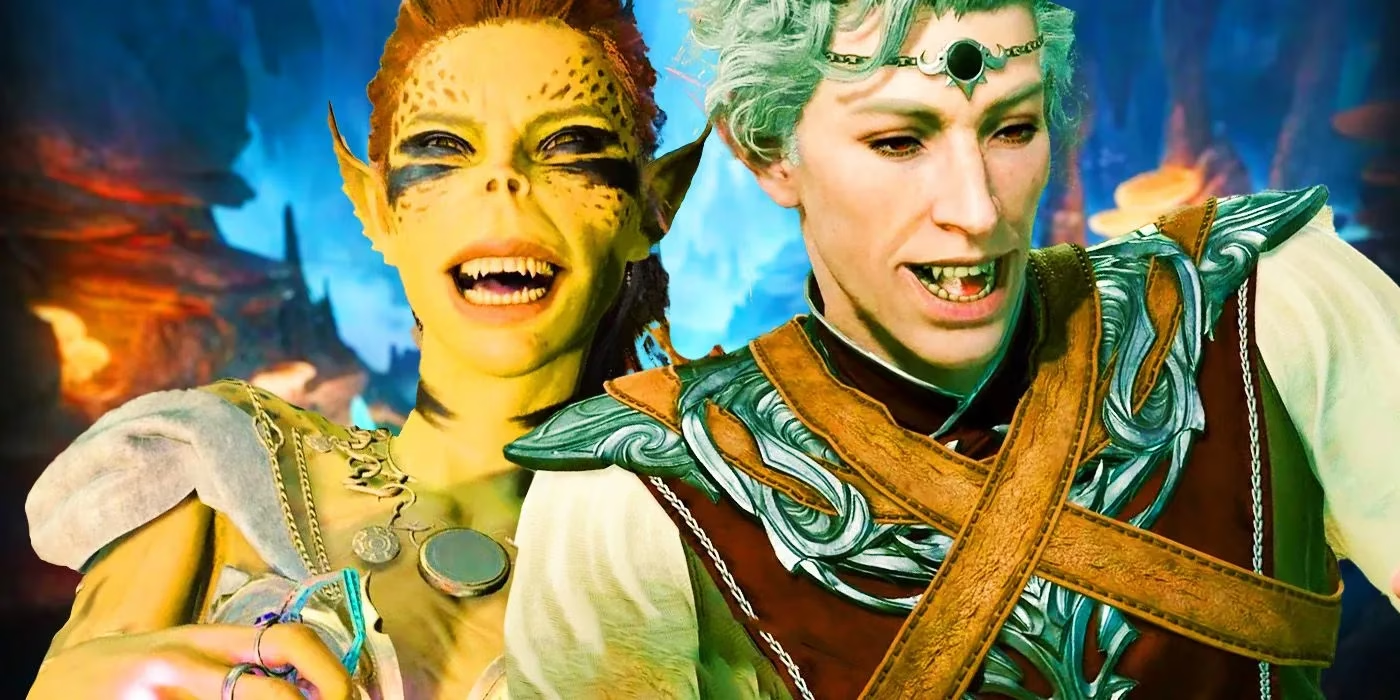
But after three full playthroughs and a dozen more abandoned ones, I hit a wall. I knew every story beat, every secret barrel in the Druid Grove. It became less about roleplaying and more about speedrunning to specific endings. The magic was starting to feel... scripted. And that's when I realized what I was truly missing: the unpredictable, collaborative storytelling you only get around a real table with friends.
Capturing the Soul of a Session
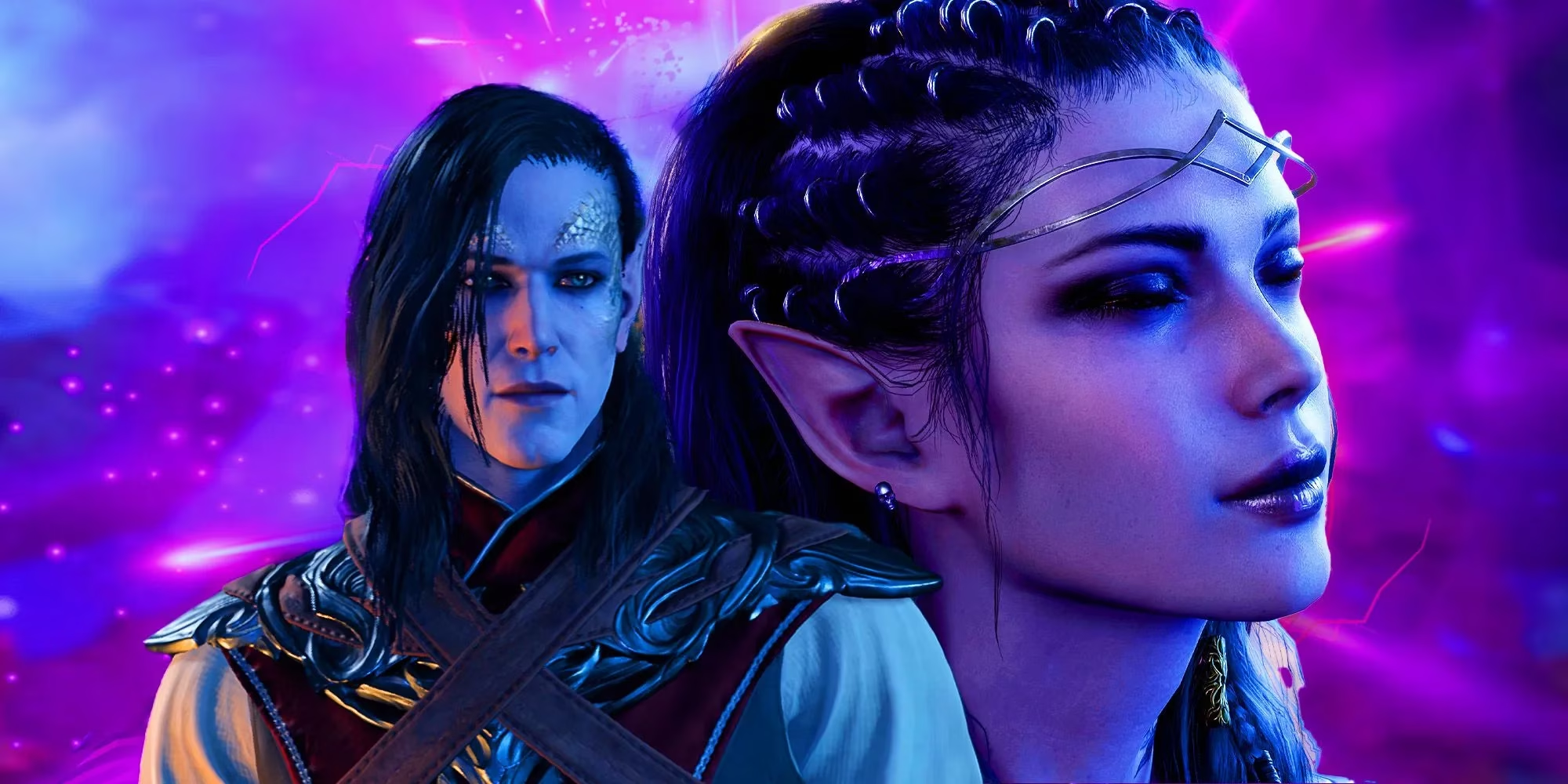
What Baldur's Gate 3 does impossibly well is capture the essence of a D&D session. The goofy, laugh-out-loud moments (Astarion, I'm looking at you, you magnificent bastard). The dark, heartbreaking choices that sit with you for days. It's all there. Playing a Dark Urge character, wrestling with that inner monster, was some of the most compelling dark fantasy I've ever experienced. It literally gave me the itch for a proper gothic horror campaign.
So, when a friend slid into my DMs asking if I wanted to join their Curse of Strahd game, I didn't hesitate. One of my Durge builds—a Haunted One, Great Old One Warlock—became the blueprint for my new tabletop character. BG3 didn't just remind me why I loved D&D it gave me the tools and the inspiration to dive back in.
The Double-Edged Sword of Perfection
Let's keep it a buck fifty. Baldur's Gate 3 is a perfect adaptation. It takes D&D's heart, polishes it to a mirror shine, and delivers it in a breathtaking package. It's the ultimate gateway drug into the TTRPG. But that's also its trap. It sets a crazy high bar. Your first tabletop session probably won't have cinematic cutscenes or a soundtrack that makes you weep. Your DM might fudge a rule. The wizard might accidentally fireball the party. And you know what? That's okay. That's part of the charm.
For veterans like me who got disillusioned, BG3 was a beacon. It reminded us of the potential, the sheer joy, that exists within D&D's rules. For newcomers, it's a thrilling introduction. Just remember, the tabletop game is a different, wonderfully messy beast. It's alive. It breathes. And sometimes, it TPKs you because the rogue rolled a 1 on a stealth check. And you'll love it anyway.
So here I am in 2026, dice in hand, character sheet filled out, ready for my next session. All thanks to a video game that did more than tell a story—it rekindled a flame I thought had gone out. Not bad for a "mere" adaptation, huh?