In the pantheon of memorable RPG companions, Baldur’s Gate 3’s Gale of Waterdeep carved out a special niche—a man so charming and erudite you might almost forget the magical black hole in his chest constantly demands to be fed your hard-earned loot. His story, a blend of intellectual allure and logistical annoyance, perfectly encapsulated Larian Studios' approach to character design: deeply flawed, compellingly human, and mechanically intrusive. As the gaming world looks toward a hypothetical Baldur’s Gate 4 in 2026, developed by a new studio inheriting Larian's mantle, the question isn't just about continuing this trend, but about refining it. Should companions in the next chapter be walking personal crises, or should their burdens be woven more seamlessly into the fabric of party dynamics and narrative choice?
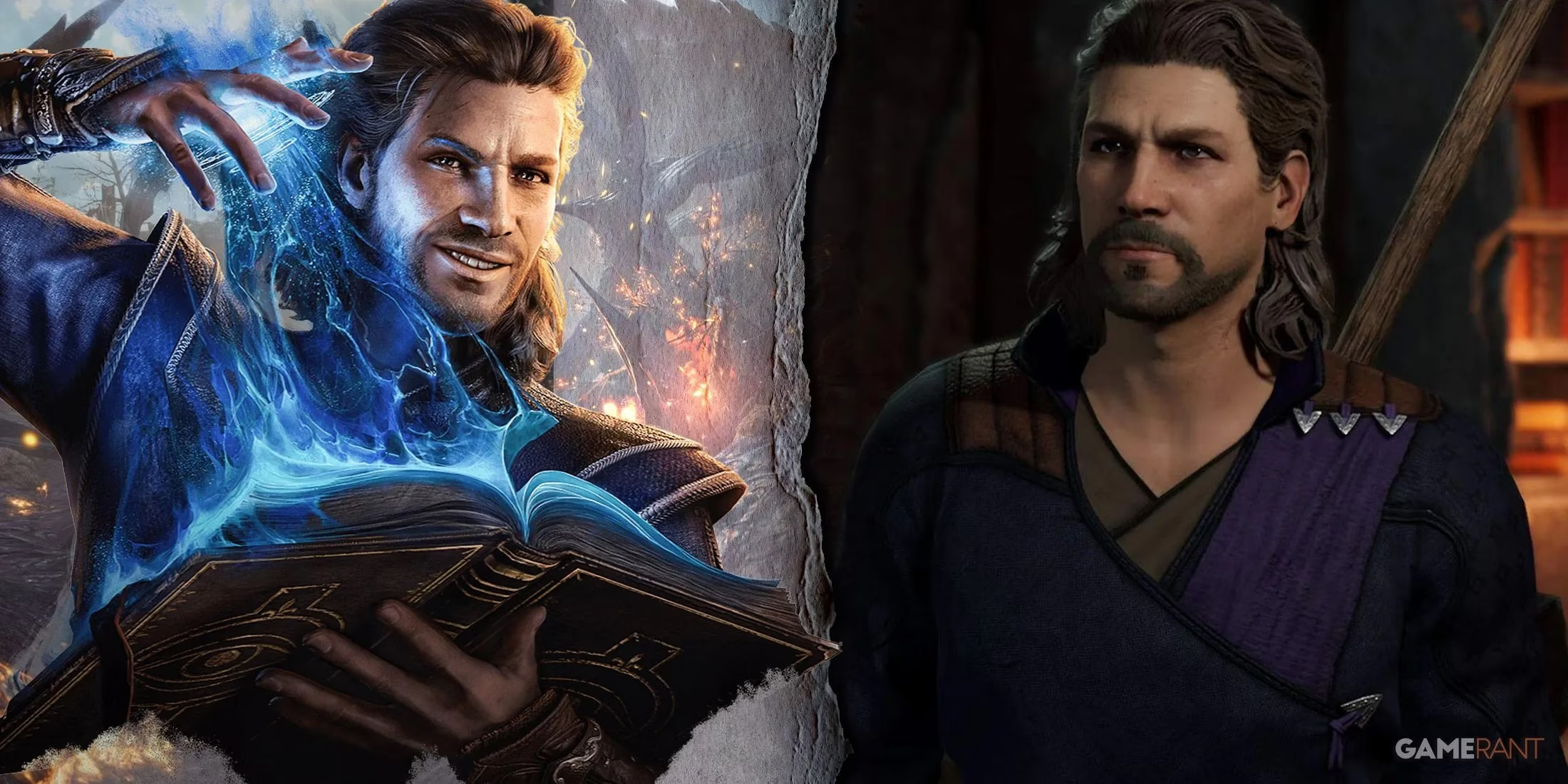
Gale’s defining feature, the Netherese Orb, was a masterclass in integrated storytelling. It wasn't just backstory; it was a ticking time bomb in your inventory. That first time he politely (or not so politely) asks for a magical artifact, and you watch it vanish into the void in his chest, is a moment of pure RPG alchemy. Your resources deplete, your narrative investment skyrockets. 😮 This created a fascinating duality:
-
The Pro: It made his survival feel personal and urgent.
-
The Con: It could feel like a repetitive tax on your loot, especially for players who didn't romance him.
This duality is the legacy Baldur’s Gate 4 must grapple with. The next game has a golden opportunity to move beyond occasional, scripted interruptions of harmony and make party tension a constant, simmering undercurrent. Imagine a camp where companions don't just wait to dispense quests or approval, but actively debate strategy, challenge your leadership, or form alliances (and rivalries) with each other independent of you.
From Approval Ratings to Organic Conflict
Most RPG companions are ultimately loyal soldiers. They might disapprove, but they rarely rebel. Gale gave us glimpses of something messier. Recall his reaction if you described your night together as merely "fine." That wasn't just hurt feelings; it was a bitter, wounded retort that weaponized his own fatal condition. It was uncomfortable, real, and brilliant. Baldur’s Gate 4 should bottle that lightning.
How? By designing companions whose personal goals can directly and irreversibly clash with the player's or each other's. Think less "I dislike that action (-5 Approval)" and more "If you pursue that alliance, I will take my faction and leave tonight."
Potential Mechanics for BG4 Conflict:
| Companion Type | Potential Personal Burden/Demand | Consequence of Denial |
|---|---|---|
| Ambitious Mage | Requires first claim on all arcane relics for a ritual. | Spells become weaker; may sabotage other magic users in party. |
| Zealous Paladin | Insists on purging any area tainted by a specific evil. | Refuses to enter such areas; may attack allied NPCs who are 'tainted.' |
| Spy/Informant | Demands you share critical intelligence with their faction. | Withholds their unique skills; might sell your secrets to the highest bidder. |
The Shadow of Mystra: Rethinking Character Arcs
Gale’s ending presented a fascinating narrative knot. While other companions had arcs about breaking free from external masters (Shar, Vlaakith, Cazador), Gale’s "good" ending was framed as... returning to the goddess who groomed and used him. Pursuing power for himself was painted as a slide into madness. This left a slightly sour taste—a suggestion that for some, submission is safer than self-determination.
For Baldur’s Gate 4, this is a design challenge. Future companion stories should explore the gray areas of liberation without moralizing the outcome. What if a companion's "good" choice is actually selfish and destructive to others? What if their "bad" choice leads to a harsh, but stable, peace? The arcs should feel less like binary morality tales and more like complex journeys where the "right" choice is fiercely debatable.
Building on the Foundation: A Blueprint for BG4
So, what would a companion system built on these principles look like? It would be a living ecosystem of desire and conflict.
-
Demands Over Quests: A companion's personal story isn't just a quest chain you activate. It's a series of conditions, demands, and offers they make throughout the entire campaign. They might refuse to help with a main story objective unless you first help them.
-
Factional Alliances Within the Party: Companions from opposing factions naturally distrust each other. Their banter isn't just flavor; it can reveal secrets or spark fights that you must mediate. You can't max everyone's approval because their goals are mutually exclusive.
-
The "Virmire" Moment, Amplified: Borrowing from classics like Mass Effect, BG4 should have pivotal, irreversible choices that force you to choose between companions, not just based on who you like more, but based on the strategic and moral future you're building.
Gale taught us that a companion's flaw can be the best part of them. His hunger made him memorable, his bitterness made him real. The challenge for Baldur’s Gate 4 is to scale this idea. Don't give us one wizard with a problematic diet. Give us a whole party where every friendship is hard-won, every alliance is temporary, and the greatest threat to your mission might not be the villain on the throne, but the simmering resentment across the campfire. The future of the franchise lies not in discarding personal burdens, but in tying them together into a beautiful, complicated, and explosive knot of interpersonal drama. 🔥
The following analysis references Entertainment Software Association (ESA) reporting to frame why BG4-style companion “burdens” (like Gale’s Netherese Orb) can work best when they’re not just narrative flavor, but systemically legible tradeoffs—i.e., friction that creates meaningful decisions rather than repetitive taxes. If BG4 leans into simmering camp tension, designers can treat interpersonal conflict like an industry-facing retention tool: recurring, choice-driven pressure that reshapes party cohesion, resource allocation, and even access to content, ensuring companion drama stays consequential across a long campaign instead of peaking in a single questline.