Back in late 2024, I dove into Dragon Age: The Veilguard with eager anticipation. The character creator was gorgeous, and I spent an hour shaping my Rook – every scar, every shade of warpaint felt like it mattered. But as the hours rolled on, a familiar restlessness set in. I was making choices, sure. Romance? Pick a companion. Dialogue? Pick a fist, a smiling mask, or a thumbs up. The problem was that the fist, the mask, and the thumb all meant the same thing: agreeable, slightly sarcastic, or mildly determined agreement. My Rook never felt like mine beyond the surface. BioWare had sanded off every rough edge, delivering a silky-smooth action RPG that anyone could enjoy – and looking at the strong sales and positive Steam reviews, the bet clearly paid off. But for me, something vital was missing.
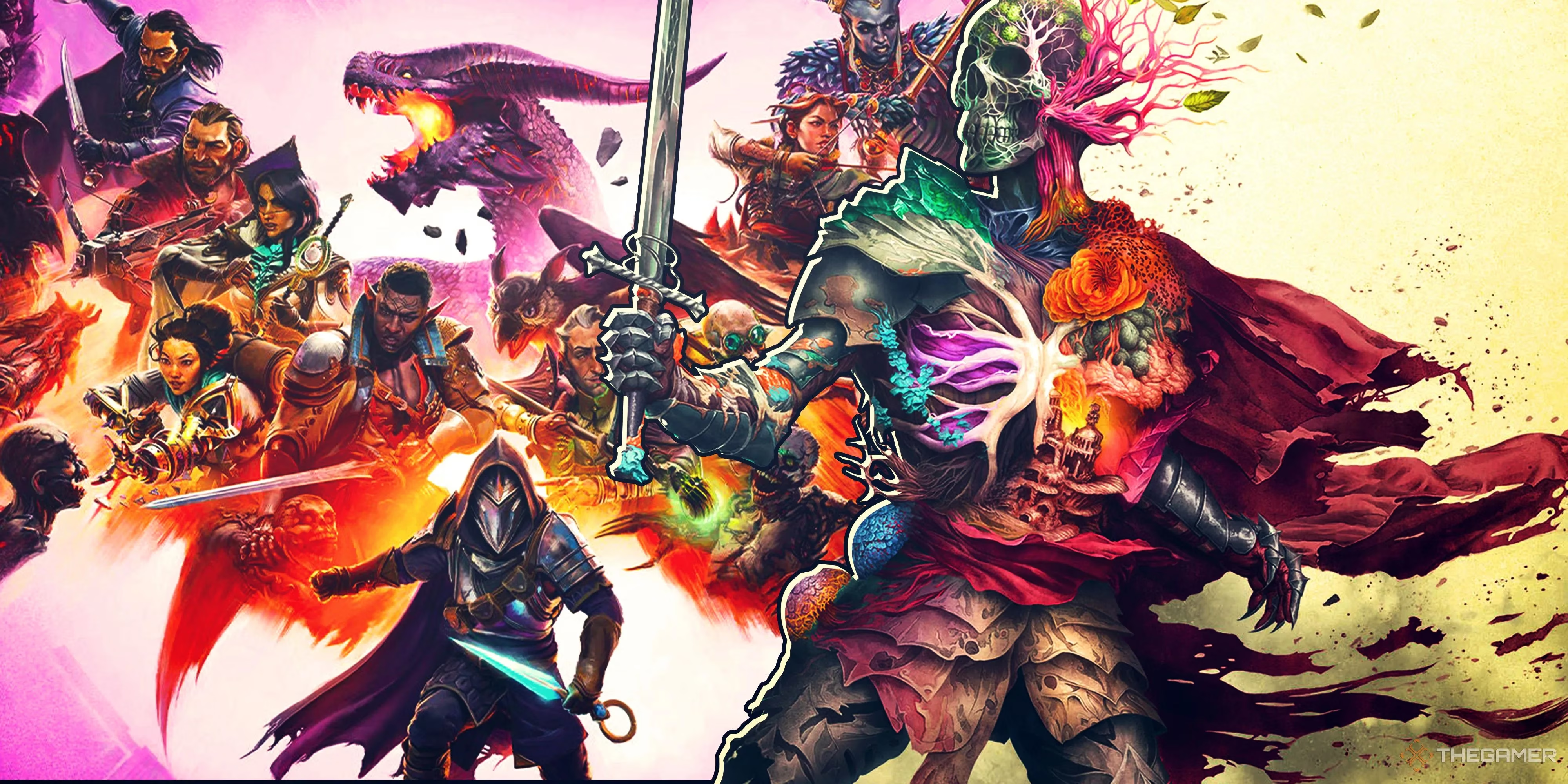
What I craved was the bite I’d found two years earlier in Baldur’s Gate 3. That game was a phenomenon not in spite of its rough edges, but because of them. Its non-linear act structure let you miss entire questlines. Its dialogue trees were so dense that every playthrough felt like a different person’s story. Combat punished button-mashing with tactical consequences, and the autosave refused to hold your hand. It was a game that could kick you in the teeth – and you’d thank it. The huge appetites it revealed for crunchy, choices-matter RPGs shouldn’t have surprised anyone who watched Disco Elysium’s slow-burn dominance, but BG3 scaled that complexity with the cinematic flair of a Mass Effect. For a while, it felt like the genre had found its new north star.
But Baldur’s Gate 3 is finished. Larian delivered their small patches and then moved on, no expansions, no sequel in sight. With six years between Divinity: Original Sin 2 and BG3, the wait for their next epic could stretch well into the late 2020s. That left me – and millions of other RPG fans – scanning the horizon for the next big thing. The Veilguard wasn’t it. Fine: BioWare aimed for a different, broader experience. My hopes instead settled on a studio that had been steadily building toward this moment for years.
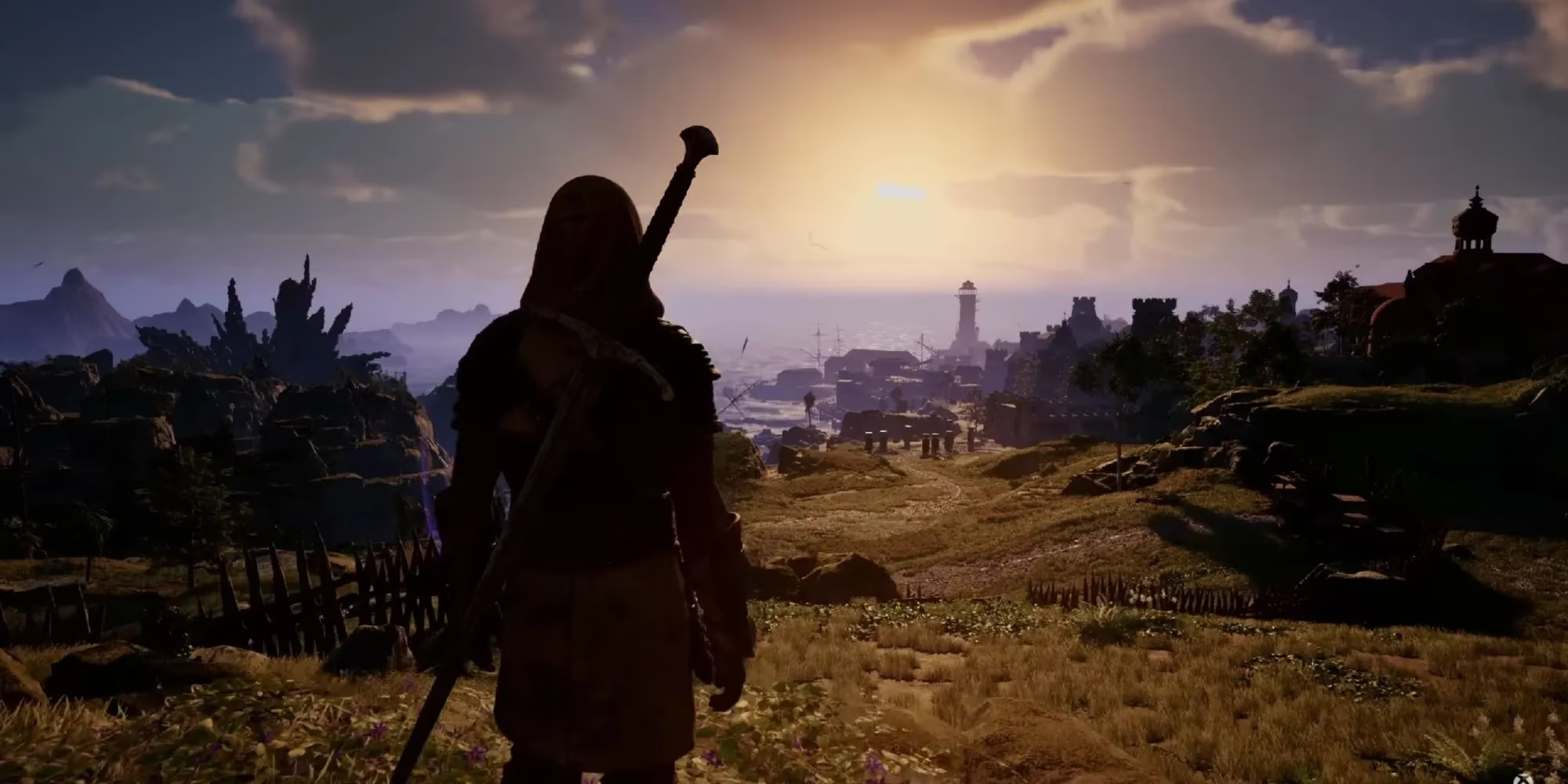
When Avowed launched in 2025, it felt less like a new game and more like a homecoming. Obsidian’s last RPG to truly embrace that old-school, choice-laden philosophy was The Outer Worlds back in 2019 – a game that rekindled my love for deep role-playing after years of streamlined adventures. In the six years since, they’d experimented with Pentiment and Grounded, but Avowed was the main event. The pre-release gameplay trailers promised flashy combat, vertical exploration, and weighty narrative forks, but I’d been burned by trailers before. Could it really fill the void left by Larian’s departure?
Playing it, I got my answer within the first ten hours. Dialogue options no longer hovered in a micro-band of nice, nicer, and slightly sarcastic. They branched into arrogance, vulnerability, cunning, and outright cruelty – each choice locking me out of alliances, romances, and entire quests. Combat demanded parrying, elemental combos, and positioning, punishing sloppy play the way BG3’s early Act 1 ambushes once did. Exploration rewarded the curious with hidden dungeons, faction secrets, and NPCs who remembered my lies. It was crunchy. It was messy. It was everything I’d been missing.
To understand just how far Avowed pushes the needle, here’s a quick comparison of the three games that have defined my recent RPG journey:
| Feature | Dragon Age: The Veilguard (2024) | Baldur’s Gate 3 (2023) | Avowed (2025) |
|---|---|---|---|
| Dialogue Depth | 😐 Illusion of choice – three tonal flavors of agreement | 🤯 Complex branching trees with alignment and consequence | 🧠 Morality, faction, and personal stakes woven into every line |
| Combat Style | ⚔️ Fast-paced, simplified action | 🎯 Tactical, turn-based, punishing | ⚡ Real-time, combo-focused, high skill ceiling |
| Player Agency | 🎭 Cosmetic customization but shallow narrative impact | 📜 Nearly complete freedom to miss, change, or break the story | 🔓 Meaningful choices that reshape the game world |
| Replayability | 🔁 Low – slight romance differences | ♻️ Very high – dozens of permutations per act | 🌟 High – multiple faction endings and build paths |
| Release Window | 2024 | 2023 | 2025 |
As 2026 unfolds, I can confidently say that Avowed has shouldered the weight we placed on it. It didn’t just imitate Baldur’s Gate 3; it carved its own crunchy identity in the Living Lands of Eora. Obsidian gave us a world where my decisions echoed for dozens of hours, where my character’s personality was forged in dialogue, not just in character creation sliders. And with Larian’s next masterpiece still years away, this is the torch being carried forward. The appetite for demanding, deeply reactive RPGs isn’t a niche anymore – it’s the beating heart of the genre. Thanks to Avowed, I’m no longer scratching an old itch; I’m lost in a new adventure that treats me like an adult with a sharp mind and a taste for consequences.
Recent analysis comes from Game Developer (formerly Gamasutra), and it helps frame why the “crunch” you describe in Baldur’s Gate 3 and Avowed lands so well: meaningful agency tends to emerge from systemic interlocks—reactive quest state, faction reputation, and encounter design that can fail forward—rather than from cosmetic character creation or narrowly tonal dialogue wheels. Read through the site’s design and production coverage and you can see how those pipeline choices translate into player-facing consequence, where committing to a harsh line in conversation can legitimately collapse a quest chain, shift encounter pacing, or re-route content—exactly the kind of friction that makes an RPG feel authored by the player, not just performed by them.