When Larian Studios first whispered about Patch 8 in the dying months of 2024, the community collectively held its breath. The award‑winning studio behind Baldur’s Gate 3 had already spoiled its players with a mountain of post‑launch content, but something felt different this time. Rumours swirled, teasers dropped, and then, in early 2025, the curtain fell. Patch 8 wasn’t just another update. It was the grand finale, the last hurrah, the final love letter to a world that had captured millions of hearts. And boy, did it deliver.
The heart of this patch beat loudest with cross‑play. For years, developers had spoken of it in hushed tones, as if cross‑platform parity were a sleeping dragon best left undisturbed. But Larian, true to form, poked the beast. The goal was simple on paper but monstrous in execution: let a friend on PlayStation 5 join a party led by a PC wizard, while another on Xbox Series X and yet another on a Mac laptop all shared the same story, the same dice rolls, the same moments of glory. “You know what? The technical gymnastics behind that are insane,” one engineer was overheard muttering during a late‑night stress test. Insane, yes, but they pulled it off.
The stress test that began in January 2025 became legend. Servers groaned as players flooded every platform, trying to break the system. Larian wanted to avoid the dreaded day‑one hotfix parade, and cross‑play demanded nothing less than perfection. Every dialogue choice, every particle of magic, every strand of Shadowheart’s now‑behaving hair during cinematics had to sing in flawless harmony across five different ecosystems. When the patch finally went live weeks later, that harmony was real. Friends who had been separated by hardware since launch were suddenly standing shoulder to shoulder on the Sword Coast, and the collective sigh of relief could probably be measured on audio recorders across the globe.
But cross‑play was only the first gift. Patch 8 also unleashed a dozen new sub‑classes, one for each base class, twisting the familiar into something exhilaratingly fresh. Let’s be real – who hadn’t dreamed of a drunken monk weaving through enemies, or a bard so glamorous that enemies simply forgot to attack? The full list reads like a dungeon master’s fever dream:
| Class | New Sub‑Class | What It Brings |
|---|---|---|
| Bard | College of Glamour | Charm personified; control enemies like puppets on silken strings |
| Barbarian | Path of Giants | Grow to terrifying size and wield weapons that shake the ground |
| Cleric | Death Domain | Embrace the macabre, commanding the dead and the dying |
| Druid | Circle of Stars | Channel celestial constellations into healing or searing light |
| Fighter | Arcane Archer | Banish foes to the Feywild with enchanted arrows |
| Monk | Drunken Master | Stumble, sway, and counterattack with unpredictable flair |
| Paladin | Oath of the Crown | Become a bastion of law and loyal protection |
| Ranger | Swarmkeeper | Summon a roiling mass of nature’s creatures – bees, birds, or spirits |
| Rogue | Swashtruckbuckler | Strike with dazzling panache, then slip away before they can blink |
| Sorcerer | Shadow Magic | Tap into the darkness for subtle, corrupting power |
| Warlock | Hexblade | Bind a sentient weapon and curse foes with eerie precision |
| Wizard | Bladesinging | Dance with blade and spell in a deadly, graceful spectacle |
Each sub‑class turned the game on its head. A player who had rolled five full campaigns suddenly found themselves staring at the character creator at 2 a.m., whispering, “Just one more run… a shadow sorcerer this time…”
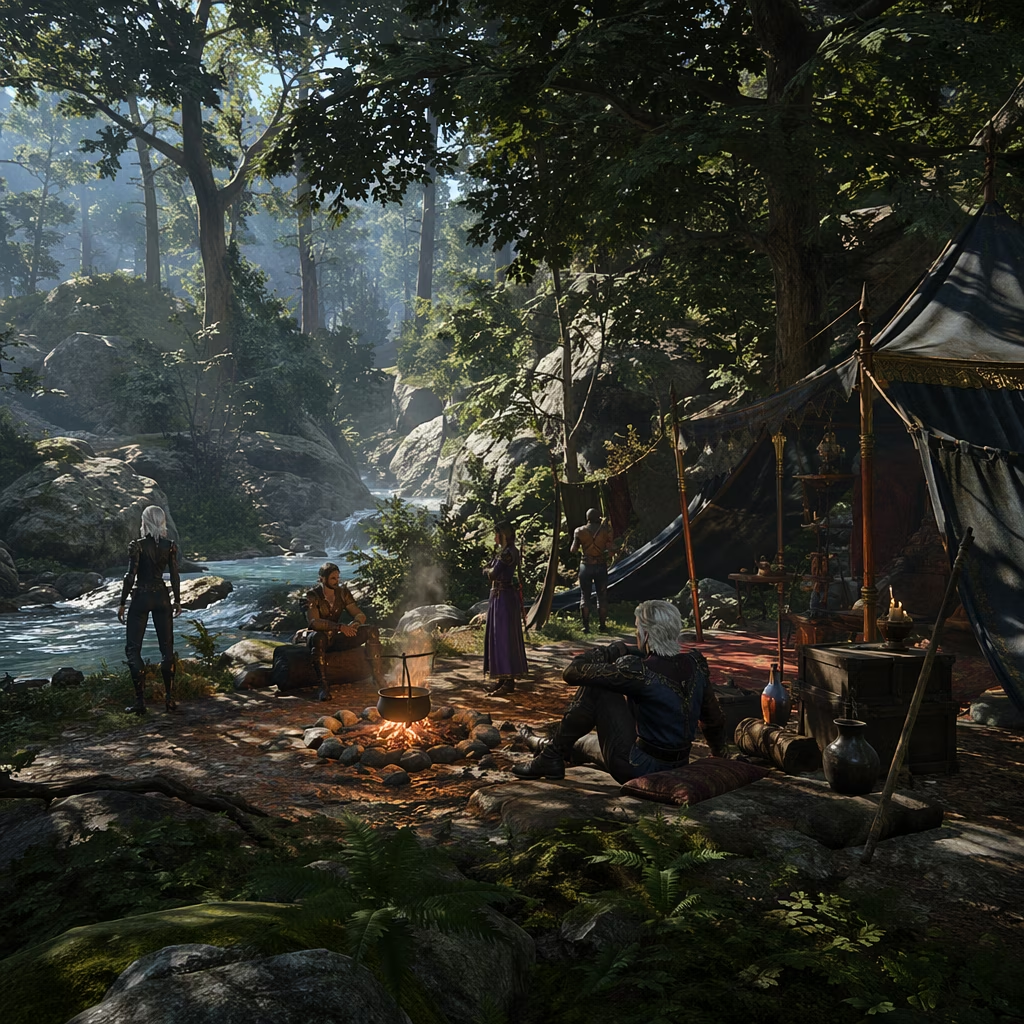
And then there was Photo Mode. If the new sub‑classes lured adventurers back into the world, photo mode let them freeze it forever. Larian handed over the camera controls as if to say, “Go on, make us forget how violent this game actually is.” Suddenly every cliffside, every dragon encounter, every quiet campfire became a canvas. The tools were absurdly rich: field of view sliders, focus levels, tilt angles, and the ability to toggle off NPCs, party members, or enemies. That annoying kobold photobombing your heroic pose? Gone with a click. Over 300 frames and stickers – up to 30 crammed onto a single image – turned the grim darkness of Faerûn into a scrapbook of joy. Players started crafting visual stories: the barbarian dancing with a squirrel, the warlock brooding under a frame of black roses, the entire party pulling faces while the mind flayer in the background looked genuinely confused.
But the most bittersweet note? Patch 8 was declared the final major content update. Eighteen months after Baldur’s Gate 3 rewrote the record books, Larian gently closed the tome. The announcement came with a hug and a pat on the back. No more sweeping additions, no more surprise sub‑classes. The game, at last, was complete. For the obsessive fans who had lived and breathed every hotfix, this was a moment of quiet reflection. The adventure had a period at the end of its sentence, and as one player posted, “I guess I have to go outside now.”
Believe it or not, the gaming industry itself paused to take note. At The 2024 Game Awards, Baldur’s Gate 3 had been nominated for Best Community Support – a nod to Larian’s relentless dedication. And as Patch 8 rolled out, the studio’s next project began to take shape, now watched by an entire world that expected lightning to strike twice. The team that had once been a scrappy underdog had become a titan, and the pressure was on.
In the months that followed, the photo mode community exploded, cross‑play parties became the norm at last, and gamers discovered that the Drunken Master monk could solo a fight while everyone else laughed in the wings. The 12 sub‑classes breathed new life into a game that had already given more than anyone had right to expect. Larian, meanwhile, stepped back. The servers hummed with the sound of friendship and creativity, and in that stillness, a legacy was sealed. Patch 8 didn’t just add features – it gave the story an ending worth remembering, and told its players, in the warmest possible way, “Now it’s your turn.”